
Last updated November 21, 2026
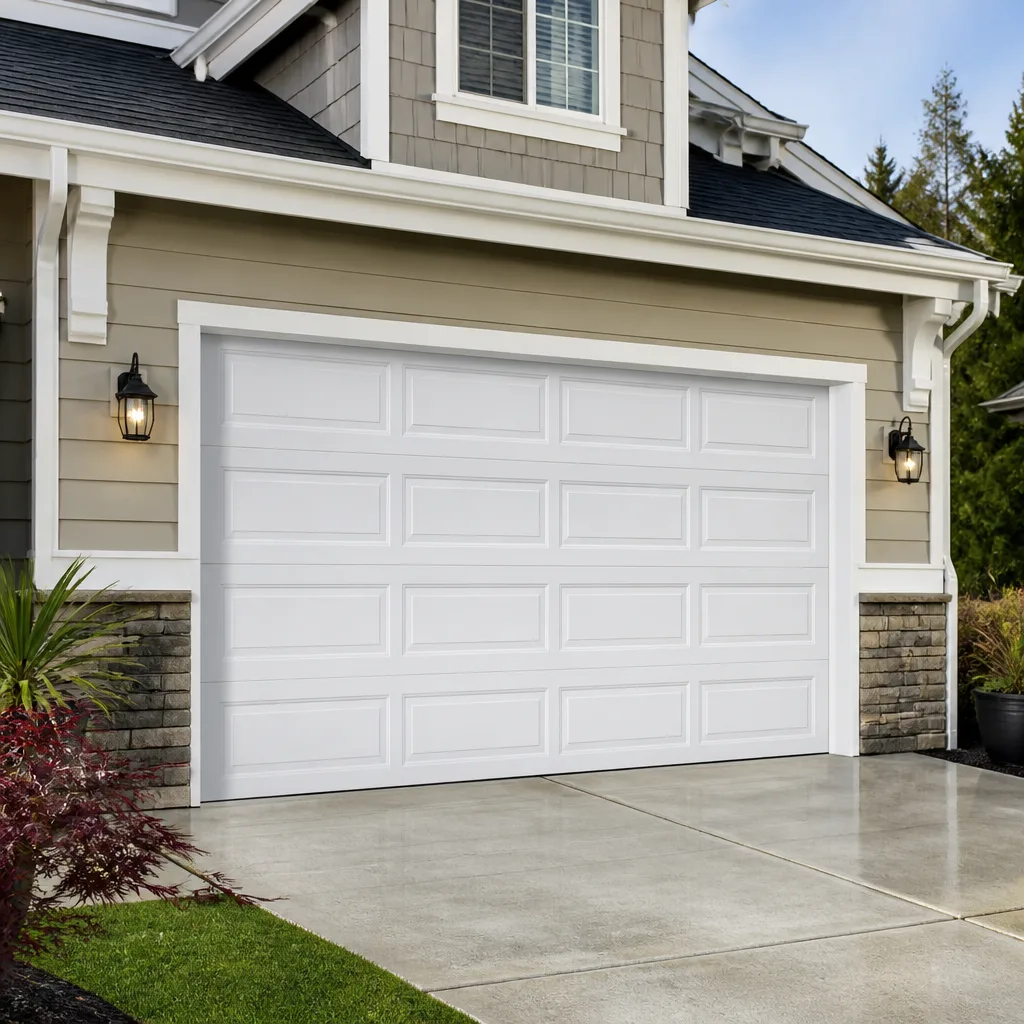 Raised-panel steel
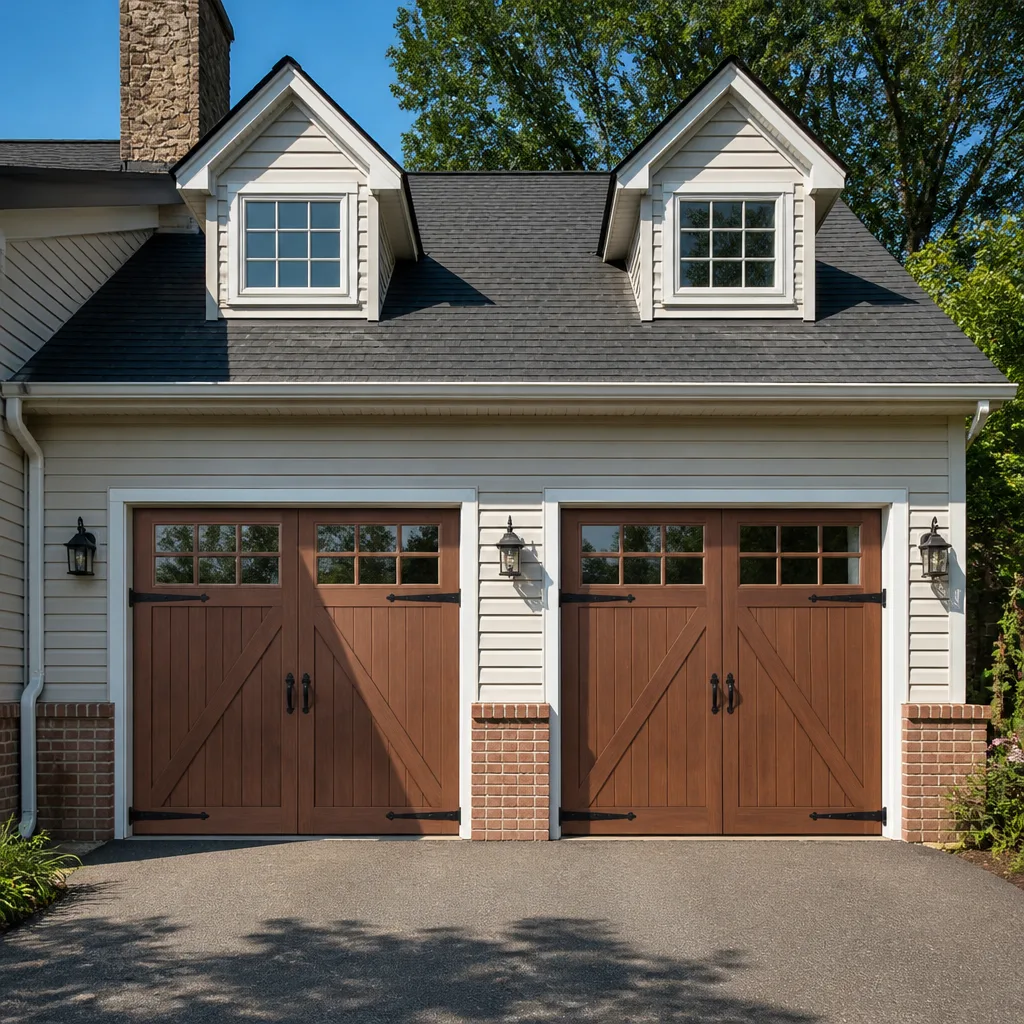 Carriage house
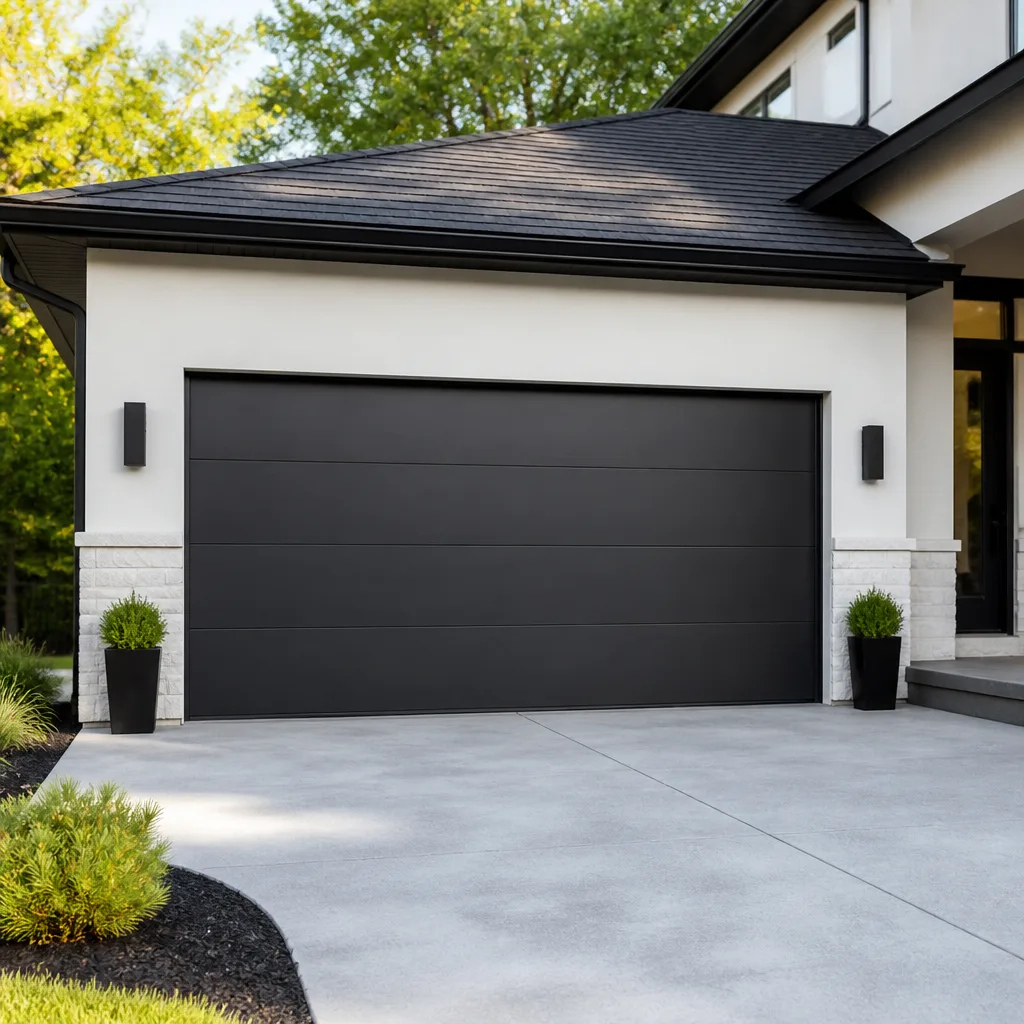 Modern flush
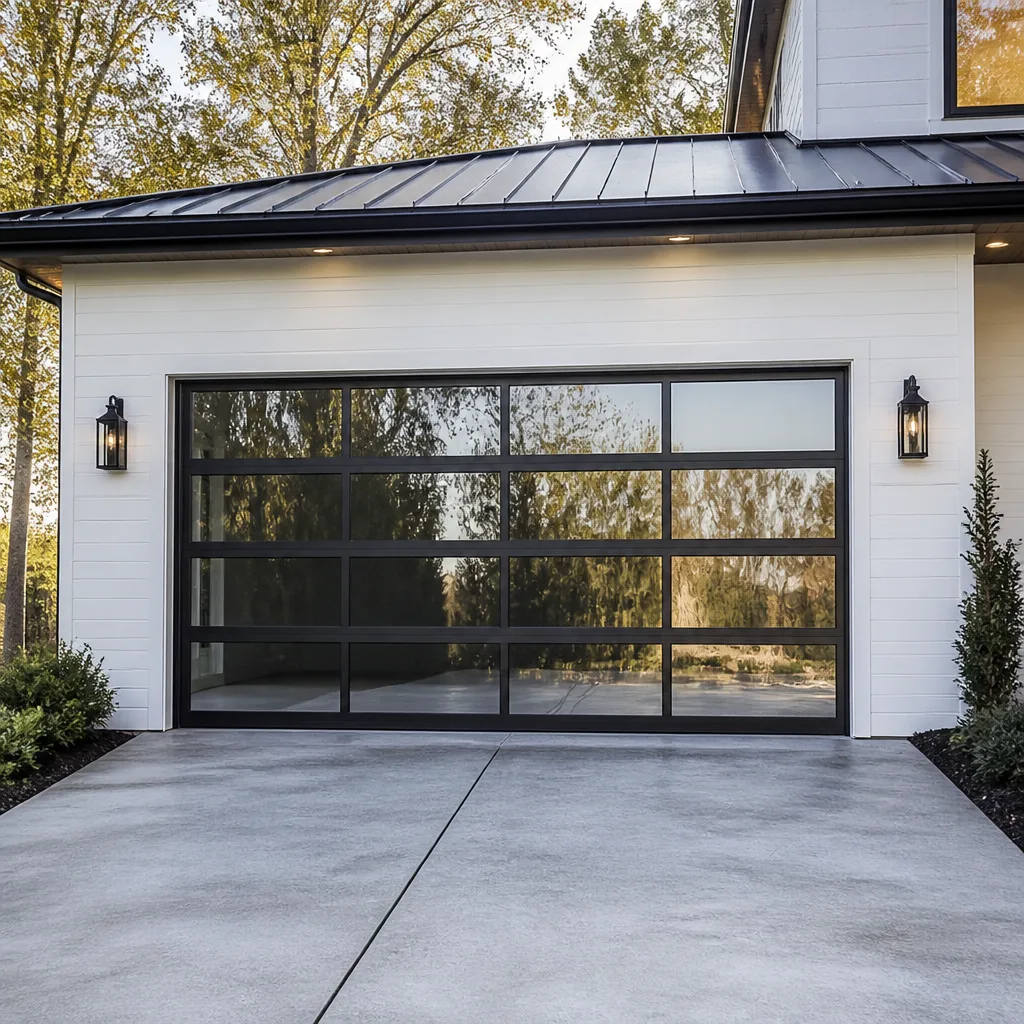 Full-view glass
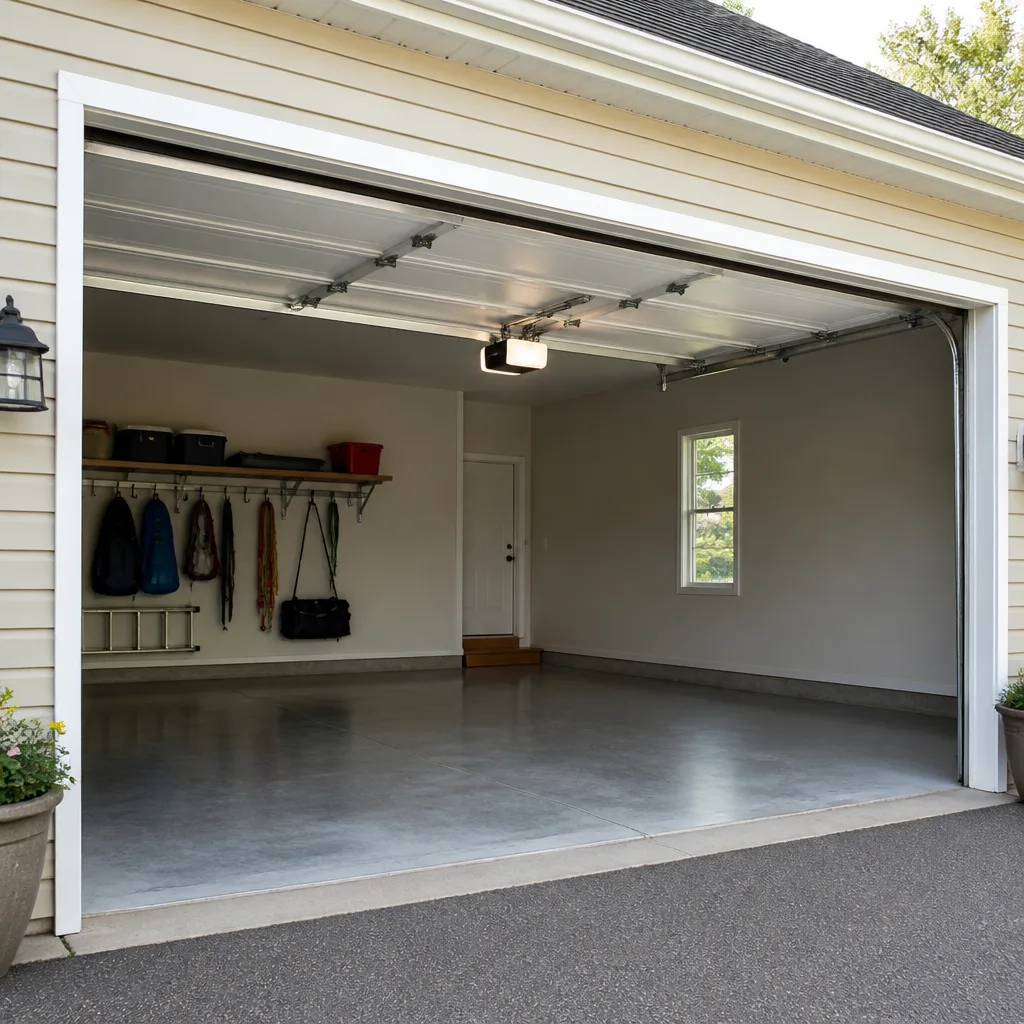 LiftMaster openers
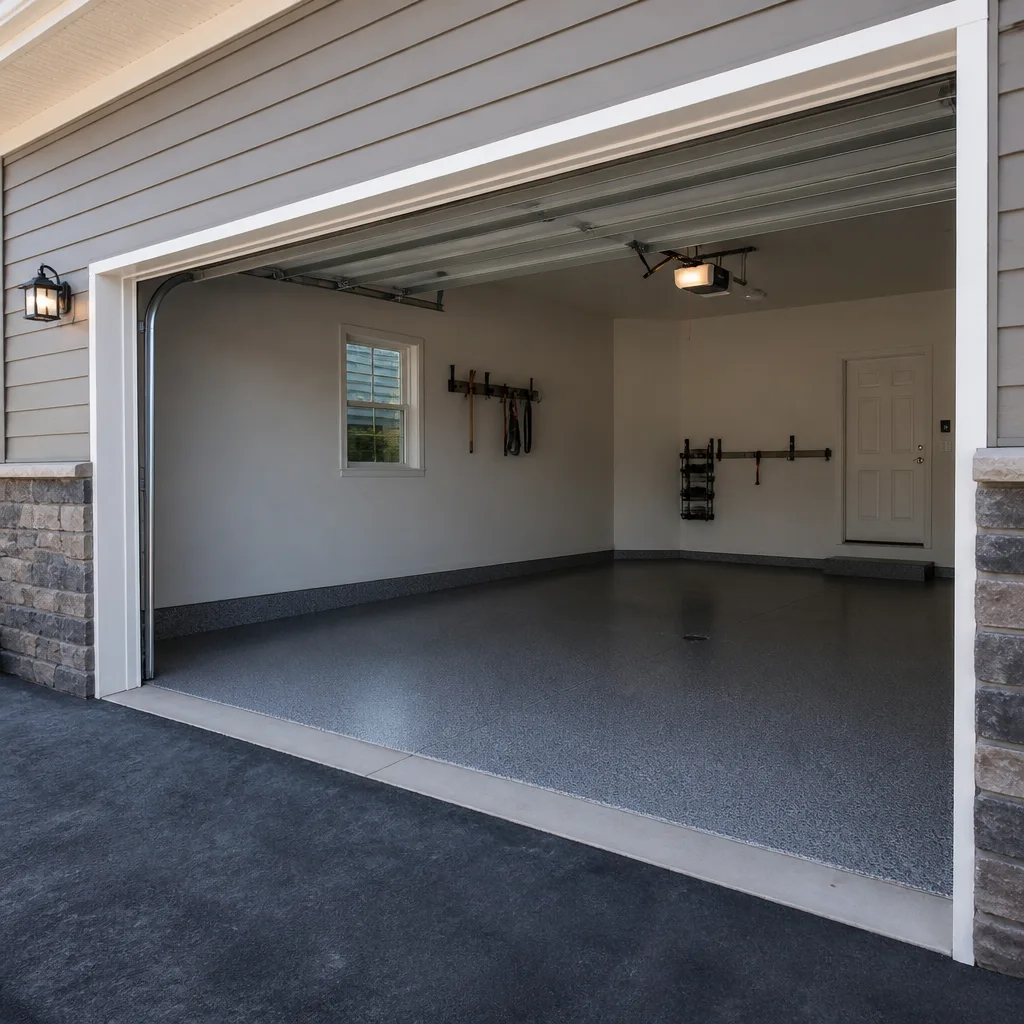 Chamberlain openers
Full 25-point door and opener safety check with every visit - springs, cables, rollers, tracks, and your LiftMaster or Chamberlain opener included
You get a price before we start. It does not change when the pro arrives.
Get your free estimateHow to Hire a Garage Door Contractor in Palm Beach Gardens: A Step-by-Step Guide
In Florida, there is no standalone “garage door contractor” license. That single fact reshapes everything about hiring in Palm Beach Gardens. The person who shows up to bid your spring replacement, your opener swap, or a full door installation may hold a general contractor license, a handyman registration, or nothing at all that speaks to garage doors specifically. Florida’s licensing structure lets people legally perform work they weren’t trained to do, which means the burden of filtering for a real specialist falls on you. This guide walks through the verification steps, the three questions that separate specialists from generalists, the documentation hurricane-rated doors require, and the red flags that show up in the Palm Beach Gardens market after named storms.
Quick Answer
To hire a garage door contractor in Palm Beach Gardens, verify their license through the Florida DBPR portal, confirm the license category actually covers the work, ask three technical questions no generalist can bluff through, and get a written estimate that itemizes materials, labor, and door ratings before you sign. There’s no dedicated garage door license in Florida, so verification plus technical screening is the only reliable filter. A specialist will answer every question without hesitation and put the scope in writing.
Styles & brands we work with
- Raised-panel steel
- Carriage house
- Modern flush
- Full-view glass
- LiftMaster openers
- Chamberlain openers
Table of Contents
- Why Florida Has No Standalone Garage Door License (and What That Means for You)
- How to Verify a Contractor’s License Through the Florida DBPR
- The Three Questions That Separate Specialists From Generalists
- Hurricane-Rated Doors, Documentation, and Your Insurance
- Red Flags Specific to the Palm Beach Gardens Market
- What a Proper Written Estimate Must Include in Florida
- What Garage Door Work Costs in Palm Beach Gardens
- Why Spring Work Deserves Extra Vetting
Why Florida Has No Standalone Garage Door License (and What That Means for You)
Florida licenses contractors by broad category, not by trade. There’s a Certified General Contractor license, a Certified Residential Contractor license, specialty licenses in categories like roofing and pool work, and then the local licensing tier that varies by county. Garage door installation and repair don’t sit in a dedicated category. A general contractor can pull permits for door work. A registered handyman can legally handle many repair tasks below the permit threshold. Neither is required to have handled a torsion spring before.
That gap matters most in Palm Beach Gardens, where the housing stock ranges from newer construction in communities like Alton and Artistry to established neighborhoods like BallenIsles and Mirasol with doors that have cycled thousands of times. Older doors have failure modes that a generalist won’t recognize. A torsion spring that’s lost tension, a cable drum that’s walked out of its groove, a bent track from a door that was bumped – each of these needs a different fix, and getting the diagnosis wrong means paying twice.
What a real specialist brings isn’t just licensure. It’s the volume of doors seen. If a contractor’s work week is mostly pressure washing and drywall patching with the occasional garage door, they’re reading the manual as they go. We see it differently because garage doors are all we do. Our technicians have up to 15 years of experience, and they’ve diagnosed the same failure patterns across every major brand installed in this part of Florida.
This is why vetting a garage door contractor in Palm Beach Gardens means going past the license check. Licensing is the floor. Technical depth is what you’re actually paying for.
How to Verify a Contractor’s License Through the Florida DBPR
The Florida Department of Business and Professional Regulation maintains an online license lookup that’s free to the public. Any licensed contractor doing work in the state should show up there. Verification takes about five minutes and it’s the single most important step in the process.
- Get the license number in writing before any verbal agreement. Ask for it over text or email so you have a record. A contractor who can’t produce a number quickly is either unlicensed or not forthcoming.
- Search the DBPR portal by license number. The record will show the license type, status (current, expired, suspended, or revoked), and any disciplinary actions.
- Check the license category against the work. A Certified General Contractor can pull permits for structural work. A Certified Residential Contractor has a different scope. A registered handyman operates under a lower local tier and cannot pull permits for the door itself. Ask directly which category applies to your job and whether a permit will be pulled.
- Confirm the license name matches the business name on the estimate. It’s not unusual for a business to operate under a trade name, but the DBPR record will show the qualifying license holder, and the person answering your calls should match up.
- Ask for proof of insurance separately. The DBPR record confirms licensure, not current general liability and workers’ compensation coverage. Request the certificate of insurance directly from the contractor’s insurer, not from the contractor.
If they’ll be working on your property, ask to see a certificate of insurance naming you as an interested party so you can verify it wasn’t lapsed. Asking for that paperwork filters out a lot of people who shouldn’t be on your roof or in your garage.
The Three Questions That Separate Specialists From Generalists
In our experience, you can tell within three questions whether you’re talking to a garage door specialist or someone who does garage doors among other things. The questions are specific enough that a generalist can’t bluff their way through, and a real specialist will answer without consulting anything.
Question 1: What gauge wire is the torsion spring you’re quoting?
Torsion springs are sized by wire diameter and coil count. A standard residential door in South Florida typically runs at a wire gauge in the .207 to .250 range, but the exact number depends on door weight, height, and the manufacturer’s spec. A specialist will either tell you the gauge from the existing spring or take measurements before quoting. A generalist will say something like “the standard size” and move on. Springs are always matched to the door – a mismatched spring fails faster or, worse, fails catastrophically. The person quoting your garage door spring repair should know this cold.
Question 2: What DASMA standards govern the door you’re recommending?
DASMA is the Door and Access Systems Manufacturers Association, and it publishes the standards for residential door safety, cycle life, and testing. A specialist knows DASMA designation numbers matter for cycle life (a common residential spec is 10,000 or 25,000 cycles) and safety testing. A generalist will look confused or hand-wave about “the manufacturer’s spec.” Ask what cycle rating the door you’re being quoted carries and why.
Question 3: How do you size the cable drums?
Cable drums are the grooved metal pieces at the ends of the torsion shaft, and their sizing determines how the cables spool as the door opens. Getting drum size wrong throws off the entire lift geometry and causes premature cable wear. A specialist can explain why the drums are matched to door height and spring diameter. A generalist probably doesn’t know what a cable drum is.
If a contractor answers all three confidently, you’re likely working with a specialist. If they fumble one or more, keep calling. This screening alone saves more headaches than any review site ever will.
Hurricane-Rated Doors, Documentation, and Your Insurance
Replacing a garage door on a home in Palm Beach Gardens is a different job than replacing one in a state without wind-borne debris requirements. Florida Building Code addresses wind-load requirements, and the door you install must be rated for the design pressure of your home’s location. That rating requires documentation, and missing documentation can be a real problem come claim time.
What a compliant installation looks like:
- A rated door with a label or documentation showing it meets Florida Building Code wind-load requirements for your area. The door itself comes with a product approval number, and that number should be on the estimate.
- A permit, when required by the local building department. Most installations and replacement jobs in this area require a permit. Ask your city’s building department whether your specific job does, and confirm the contractor is pulling it – not leaving it on you.
- An installation that follows the manufacturer’s anchoring spec. The best-rated door installed with the wrong number or spacing of anchors doesn’t meet its rating. A specialist installs to the written spec and can explain the anchoring.
- An inspection and sign-off from the local authority having jurisdiction. When a permit is pulled, an inspection closes the loop. Keep that paperwork with your home records.
- A copy of the compliance documentation in your own file. If you ever sell or file a claim, that paperwork is what proves the door was installed correctly.
There’s an insurance angle here. If your door was replaced without a permit, without the required wind rating, or installed outside the anchoring spec, an insurer may treat the installation as non-compliant, which can affect how a claim is handled. We can’t speak to specific policy outcomes, but we can tell you that documentation matters. Ask your insurer how they treat door installation paperwork, and keep it on hand. If you’re going through a full replacement, our garage door repair team can walk you through what a compliant install in Palm Beach Gardens looks like – sometimes repair is the better path to compliance than replacement, and it’s worth having the conversation.
Red Flags Specific to the Palm Beach Gardens Market
Palm Beach Gardens sees the same pattern every time a named storm tracks through. Unlicensed crews show up, put door hangers on homes, and offer to “fix the door” or “replace the spring” for cash. Some are legitimate. Many are not, and the ones that aren’t are gone before the door fails again.
The tell for a storm-chaser crew is simple: they can’t produce a Florida license number that checks out, they want cash or a check made out to a person instead of a business, they want to start immediately without a written estimate, and their truck is a rental with no signage. If any of those are true, walk.
Other red flags specific to this market:
- They knock on your door after a storm and offer a discount if you sign today. Legitimate contractors don’t typically cold-knock.
- They quote a price before measuring the door. Spring gauges, cycle counts, and door weights require measurement. A price given over the phone without measurements is a guess that will grow once they see the job.
- They can’t name the door brand you have. Palm Beach Gardens homes run Clopay, Amarr, Wayne Dalton, and dozens of other brands. A specialist recognizes the door on sight and knows the parts spec.
- They push a replacement when a repair will do. A bent track isn’t a new-door job. A worn roller isn’t a new-door job. If the first answer is “you need a new door,” get a second opinion.
- They won’t put the scope in writing. Florida law and basic contract practice both favor written estimates. Anyone who resists is telling you something.
- Their quote is dramatically lower than everyone else’s. On a job that requires brand-matched springs, rated doors, and permitted installation, a suspiciously low number usually means corners being cut somewhere.
- They can’t tell you what brand of spring they’ll install. Springs should be brand-matched and sized to the door. If the answer is “whatever we have on the truck,” the door will fail faster.
What a Proper Written Estimate Must Include in Florida
A written estimate isn’t just a number on a piece of paper. It’s the record of what the job actually includes, and it protects you from scope creep – the practice of discovering “that wasn’t included” after the work starts. Under Florida contract practice, a residential contract above the threshold for the type of license in play should be in writing; ask the DBPR or your county if you’re unsure which threshold applies. Regardless of the threshold, always get it in writing.
What belongs in the written estimate, at minimum:
- Contractor’s name, license number, and business address. A real business address, not a P.O. box alone.
- The scope in plain terms. “Replace torsion springs (2), matched set, .243 wire, model X” is a scope. “Fix springs” is not.
- Materials and brands, itemized. Spring brand, door brand, opener brand if included, and the horsepower or cycle rating where relevant.
- Labor and disposal. Removal of the old door or springs and haul-away is work. If it’s not itemized, it may not be included.
- Permit and inspection responsibility. Who pulls the permit, who pays for it, and who schedules the inspection – spelled out.
- Payment terms and the total price. When payment is due, in what form, and whether a deposit is being asked and why.
- Warranty terms in writing. Manufacturer and labor warranty, separately, with duration and what’s excluded.
- Change order process. How additional work is authorized if something unexpected turns up behind the trim.
What unscrupulous contractors omit: brand names, cycle ratings, permit responsibility, disposal fees, and warranty specifics. Those omissions are what let a written quote turn into a bigger final invoice. The written estimate is the price. If the scope changes because the job is bigger than the estimate anticipated, that change should be authorized before work continues, not invoiced after.
When you’re ready for a firm number, our garage door opener repair specialists can quote the opener side of the work, and our installation team can quote door replacement on the same visit so you’re not chasing two companies for one project.
What Garage Door Work Costs in Palm Beach Gardens
Garage door pricing in Palm Beach Gardens runs higher than many parts of the country because of the wind-load and permit requirements on doors, and because spring replacement gets sized to the door rather than swapped for a generic part. Here’s what typical jobs in this market look like, as estimates:
| Job | Typical Estimated Range |
|---|---|
| Torsion spring replacement (single spring) | $180 – $340 |
| Torsion spring replacement (matched pair) | $360 – $680 |
| Extension spring replacement (per spring) | $150 – $290 |
| Opener repair (component-level) | $150 – $350 |
| Opener replacement (belt or chain drive installed) | $350 – $650 |
| Roller and hinge replacement (set) | $150 – $300 |
| Cable replacement (matched pair) | $200 – $400 |
| Track replacement (per side) | $180 – $400 |
| Full door removal and installation (single-car, non-rated) | $1,200 – $2,200 |
| Full door removal and installation (wind-rated, single-car) | $1,800 – $3,500 |
| Full door removal and installation (wind-rated, double-car) | $2,800 – $5,500 |
Those are estimates, not promises. The written quote sets the final price, and the quote should match the estimate before any work begins. A single spring and a matched pair are priced separately because they’re different jobs – the pair is almost always the right call on a door that’s cycled enough to break one, since the second spring is at the same wear point and will usually follow. Replacing one spring on a pair door leaves you paying for the second visit.
Whenever you’re being quoted a number, ask three things: what the written estimate includes, what it excludes, and what would change the price. If any of the three answers feels vague, get a second quote. A fair quote is a fair quote, and a specialist will put their number in writing without hesitation.
Why Spring Work Deserves Extra Vetting
Springs are the most dangerous part of any garage door, and they deserve a harder vetting process than any other repair on the door. A torsion spring is under hundreds of pounds of tension. When it fails, or when someone tries to service it without proper tooling and technique, the stored energy releases fast and without warning. This is one of the few components of a home where an inexperienced hand can be seriously injured in an instant.
What proper spring service looks like:
- The technician uses the correct winding bars for the spring size. Improvised tools – screwdrivers, pliers, whatever’s in the truck – are how injuries happen.
- The spring is matched to the door. Wire diameter, inside diameter, and length all affect lift. A mismatched spring wears out faster and may not lift the door safely.
- Springs are replaced in pairs when the setup calls for it. A specialist will explain why.
- The installer tests balance and travel after winding. A door that isn’t balanced puts strain on the opener and on the springs themselves.
- They can explain the difference between torsion and extension systems. Both fail in different ways, and the fix isn’t interchangeable.
Palm Beach Gardens homes run both torsion and extension spring setups depending on the door brand and era. We quote springs as a dedicated service with brand-matched components, not as a generic “repair,” because the risk warrants treating it separately. If a contractor treats spring replacement like a minor chore that’s rolled into a broader handyman visit, that’s a sign they don’t see the danger clearly. Our garage door spring repair team handles spring work as a specialty for exactly that reason.
Common Mistakes to Avoid
- Hiring on price alone. The cheapest quote usually reflects a smaller scope or a mismatched part. A fair price for brand-matched springs and a rated door will always cost more than a number that assumes neither.
- Skipping the DBPR check. It takes five minutes and it’s the only way to know whether the license is current, real, and in the right category for the work. If the contractor dodges the question, that’s your answer.
- Not asking for the cycle rating on a new door. Wind-rated doors in Palm Beach Gardens carry a cycle rating. A door that meets wind-load requirements but fails at 5,000 cycles will need replacing sooner than one rated to 25,000. Ask.
- Skipping the permit to save time. A door installed without a permit leaves you with a compliance gap. If a future claim depends on installation documentation, the missing permit is a problem you can’t fix retroactively.
- Replacing one spring on a pair. This is the most common spring mistake. If one spring broke, the other is at the same wear state. Replacing the pair costs less than two separate visits and keeps the door balanced.
- Letting a generalist handle spring work. Springs aren’t a generalist job. If the contractor’s answer to “how do you handle spring winding” is vague, stop the conversation.
- Not getting the written estimate before signing. A verbal number isn’t a quote. The written estimate is what you can hold anyone to if the scope grows.
- Ignoring the opener’s smart-home compatibility. If you’re on LiftMaster’s MyQ or Genie’s Aladdin Connect, the replacement opener needs to support the same app. A generalist may install a compatible-looking unit that doesn’t talk to your system.
See the difference
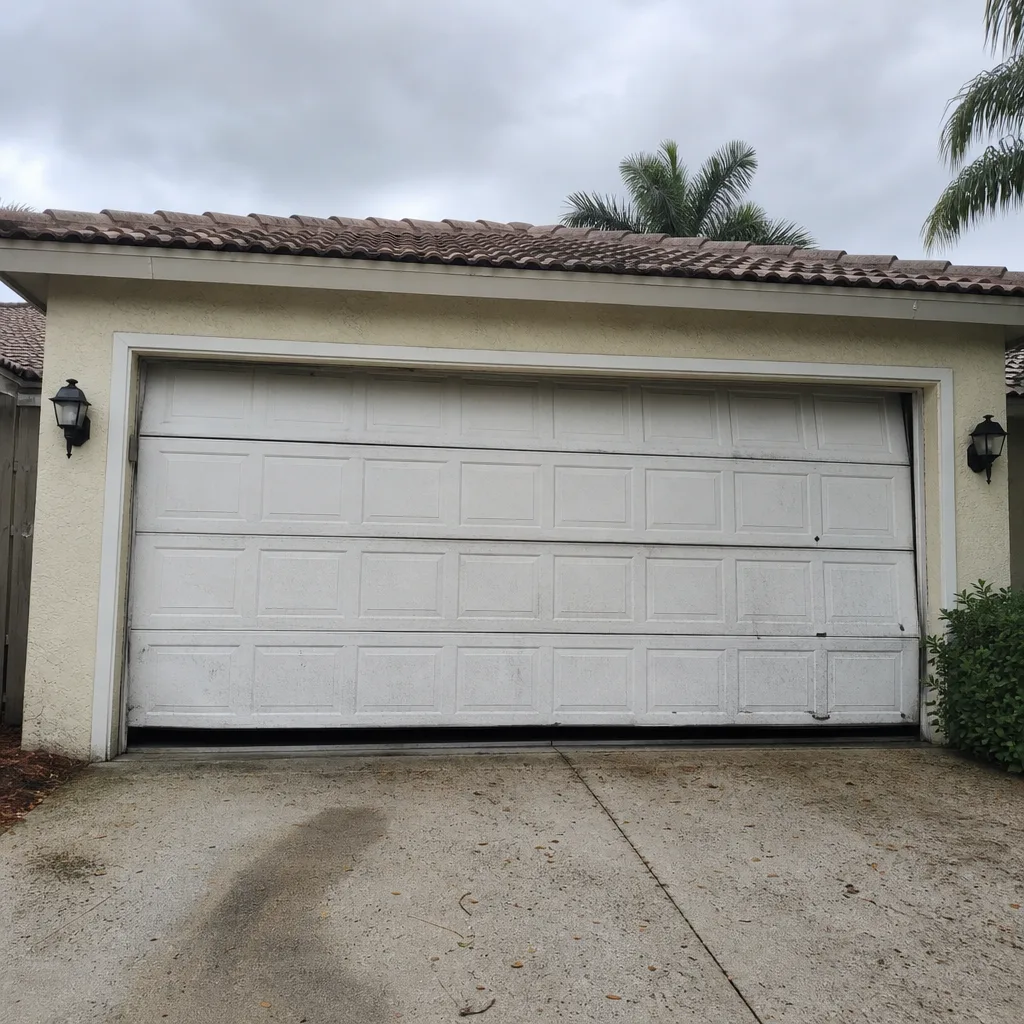 Before
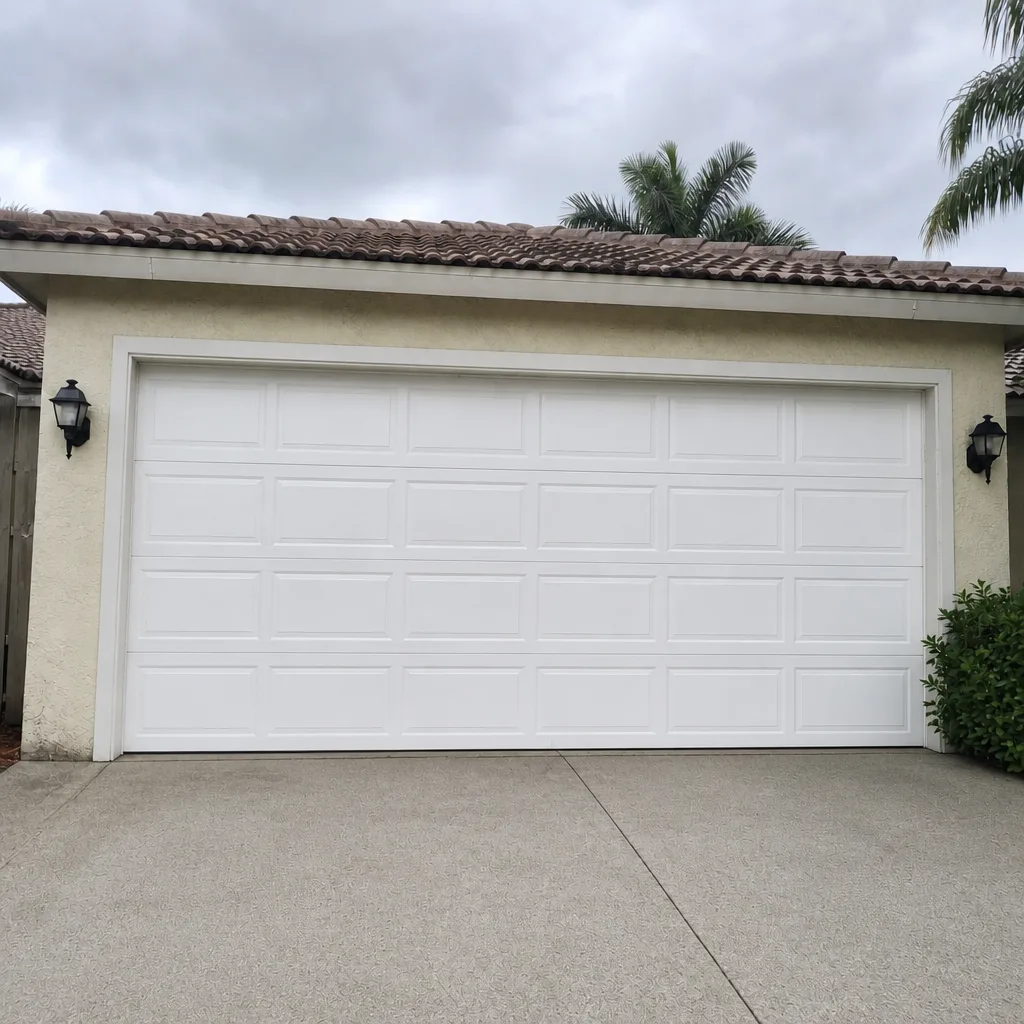 After
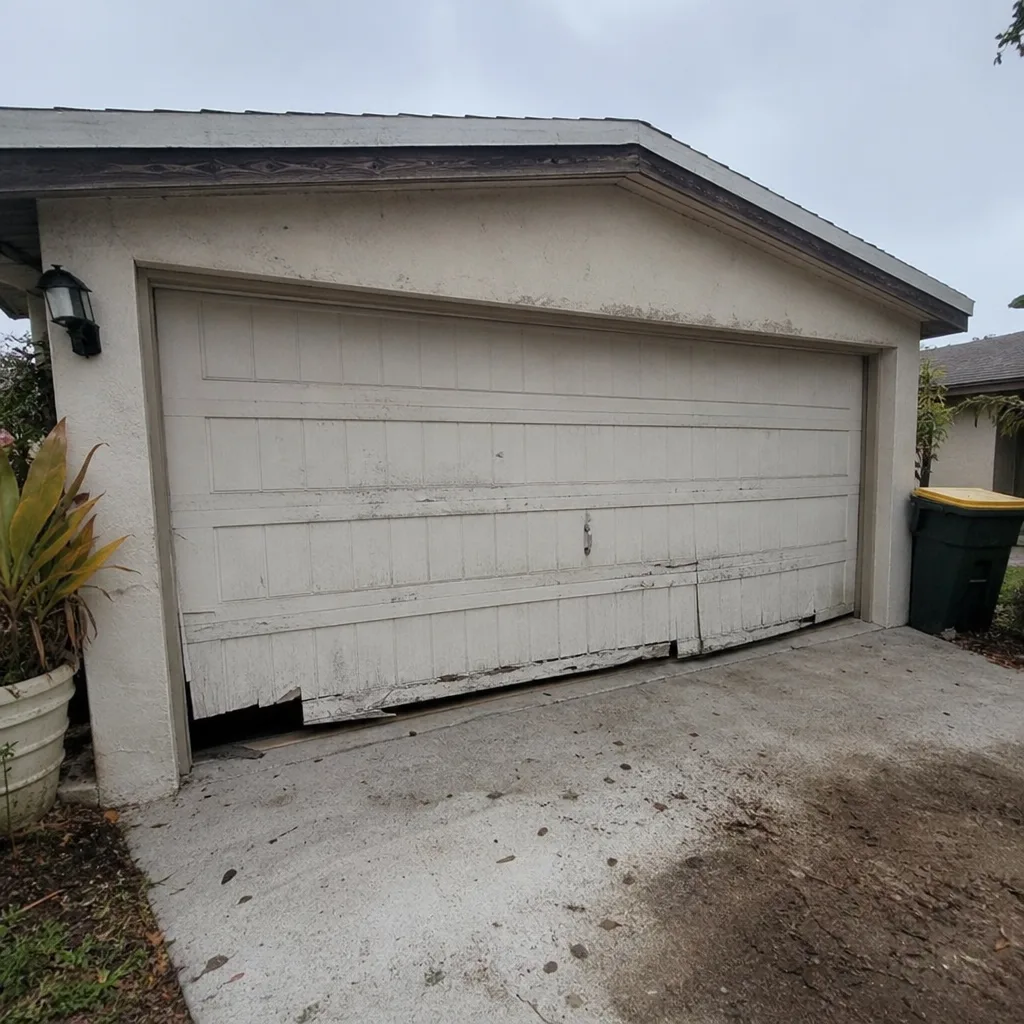 Before
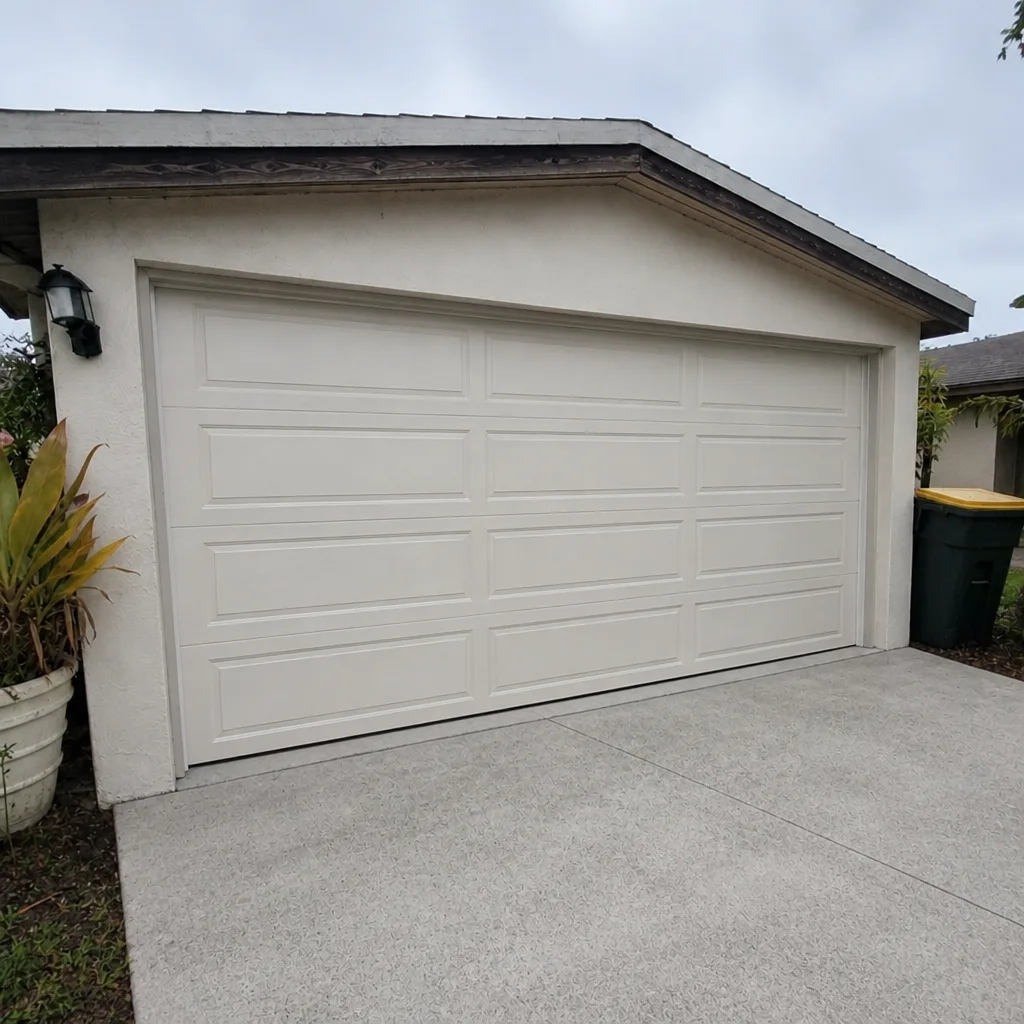 After
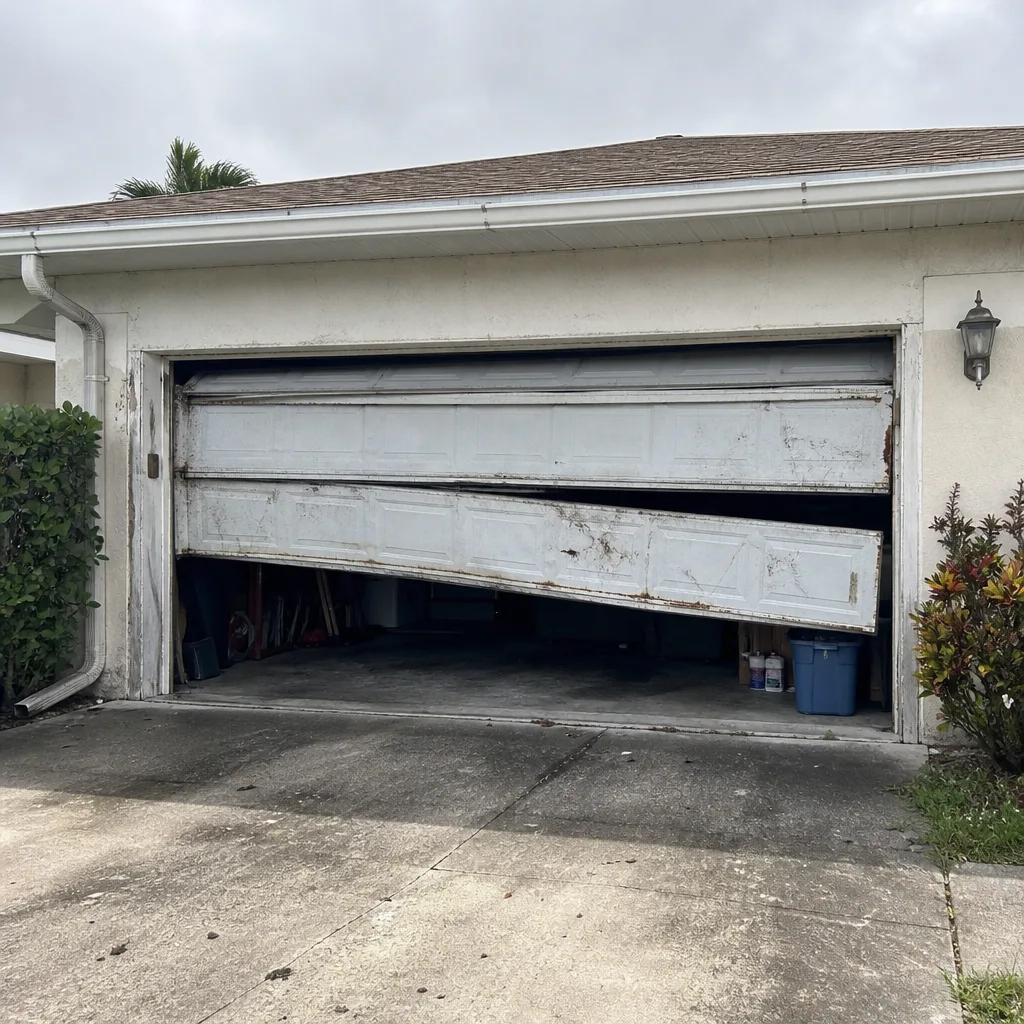 Before
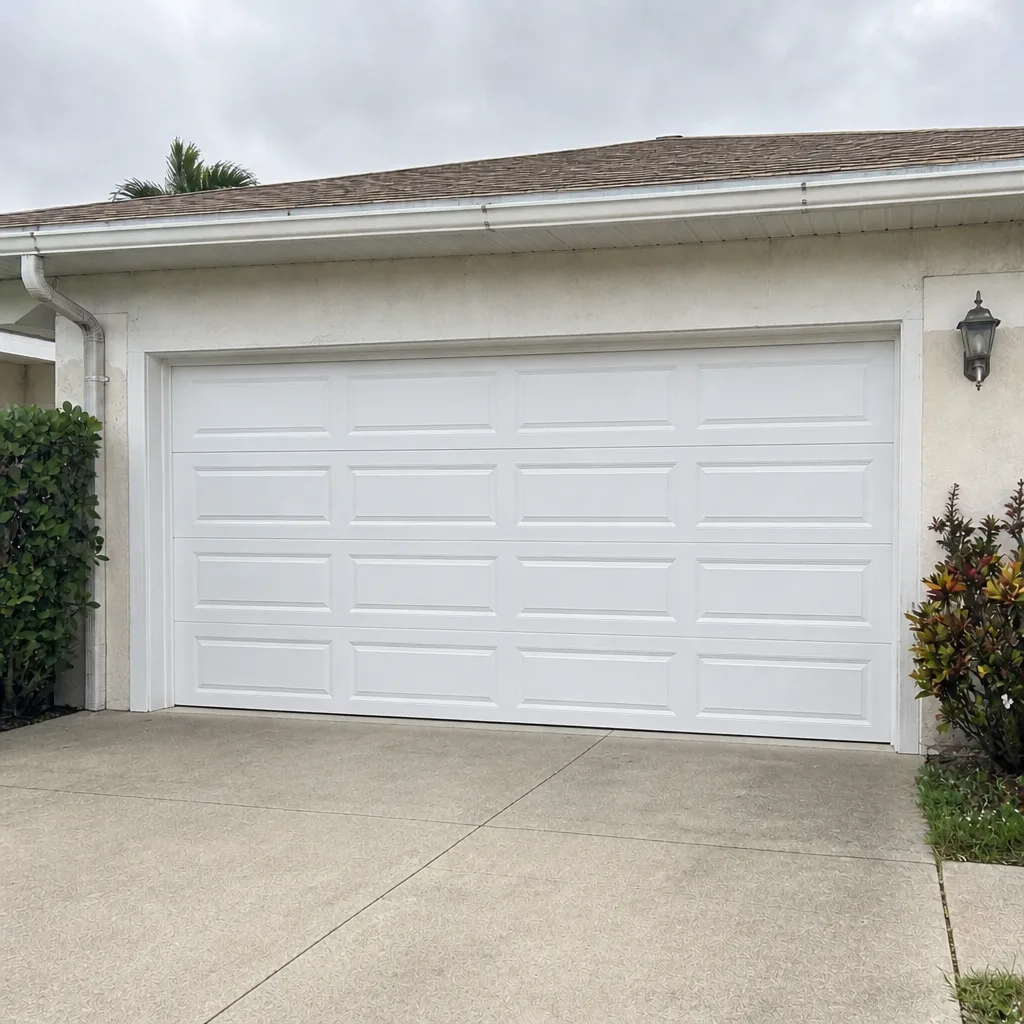 After
When to Call a Professional
Some garage door work is safe to look at, and some isn’t safe to touch. Here’s when to stop and call. If a torsion or extension spring has snapped, the door won’t lift, or you hear a loud bang from the garage and find a gap in the spring coil, do not try to operate the door. Springs under tension fail dangerously, and a broken spring can damage the opener or the cables if you force the door. If the door is off its tracks, tilted, or hanging unevenly, stop and call – forcing it back on-track bends the panels and the tracks. If an opener runs but the door doesn’t move, or the door reverses immediately, that’s a safety-sensor or logic issue and shouldn’t be run until it’s fixed. And if you’re hearing a loud bang or seeing frayed cables, treat it as urgent. We answer 24/7 at (866) 490-4428, with fast dispatch from 7am to 7pm, Sunday through Friday. Palm Beach Gardens Garage Door Repair Pros offers free estimates in Palm Beach Gardens, and we can usually get out the same day on repairs.
Frequently Asked Questions
No. Florida has no standalone garage door contractor license. Garage door work falls under general contractor or residential contractor licensing, or under a registered handyman tier depending on the scope, so homeowners have to verify licensing through DBPR and screen for technical specialization themselves. The license check is the floor; the technical questions are what tell you whether you’ve found a specialist. If you’re in Palm Beach Gardens and want to skip the screening, call (866) 490-4428 for a free estimate.
Torsion spring replacement in Palm Beach Gardens typically runs $180 to $340 for a single spring, and $360 to $680 for a matched pair, depending on the door’s size and spring specs. Extension spring replacement runs lower, usually $150 to $290 per spring. Those are estimates – the written quote sets the final price. Springs are matched to the door, so the numbers depend on the actual measurements. Call (866) 490-4428 for an exact quote – estimates are free.
We can usually get out the same day for repairs, though storms and demand spikes can push it. Call (866) 490-4428. We answer 24/7. Fast dispatch from 7am to 7pm, Sunday through Friday. A call outside dispatch hours is booked into the next opening, Sunday through Friday, 7am to 7pm. If your spring has snapped or the door is hanging off its tracks, don’t try to force it open in the meantime.
Not without your authorization. The written estimate sets the price, and if the job turns out to be bigger than the estimate anticipated, that change gets authorized before work continues. In our experience, most quotes hold when the estimate is written after proper measurement, which is why we measure before quoting rather than quoting over the phone. Call (866) 490-4428 for a free estimate.
Most garage door replacements in this area require a permit through the local building department, especially when the door carries a wind-load rating. Ask your city’s building department whether your specific job requires one – the answer depends on the scope. A permitted install comes with an inspection that documents the job for future claims, so it’s worth doing even when the timeline feels tight. Call (866) 490-4428 to discuss a compliant installation.
The local professionals we connect you with are licensed and insured as Florida requires, and we can walk you through how to verify both through the DBPR portal and by requesting the insurance certificate directly. Verify every contractor you hire, ours included. Call (866) 490-4428 for a free estimate and we’ll go through the paperwork with you.
We’re factory-familiar with LiftMaster, Chamberlain, Genie, Clopay, Amarr, Wayne Dalton, Craftsman, and Raynor, and we diagnose brand-specific quirks without a learning curve. That means the springs, openers, and doors you’re most likely to have in Palm Beach Gardens are ones we’ve worked on. Call (866) 490-4428 and tell us what door and opener you have.
Yes. LiftMaster’s MyQ and Genie’s Aladdin Connect are two of the systems we work on regularly. App connectivity issues are usually a WiFi router or bridge problem, a firmware update, or a module issue, and we can diagnose which. If the opener itself has reached the end of its service life, our garage door opener repair team can quote a replacement that keeps your smart-home integration intact. Call (866) 490-4428 for a free estimate.
The Bottom Line
Florida’s licensing rules don’t protect you from hiring the wrong specialty, so the work is on you: verify through DBPR, ask the three questions that separate specialists from generalists, insist on documentation for any hurricane-rated door, and get a written estimate that itemizes brands, cycle ratings, permits, and warranty terms. Springs are the one component to treat with extra caution – that work is not a generalist job. Palm Beach Gardens homeowners have the same right to a specialist they’d expect from a roofing or electrical hire, and the screening takes about fifteen minutes. If you want to skip the screening, call (866) 490-4428 for a free estimate. We answer 24/7, with fast dispatch from 7am to 7pm, Sunday through Friday, and we’re ready to walk you through the paperwork, the measurements, and the written quote. Our technicians have up to 15 years of experience with the brands most Palm Beach Gardens homes actually have installed.
Whether you need a repair, a spring, an opener, or a full replacement, one call covers it. Our team can also connect you with the Palm Beach Gardens Garage Door Repair Pros hub for the full service picture, and a written estimate comes before any work starts.
Written by the team at Palm Beach Gardens Garage Door Repair Pros.