
Last updated November 21, 2026
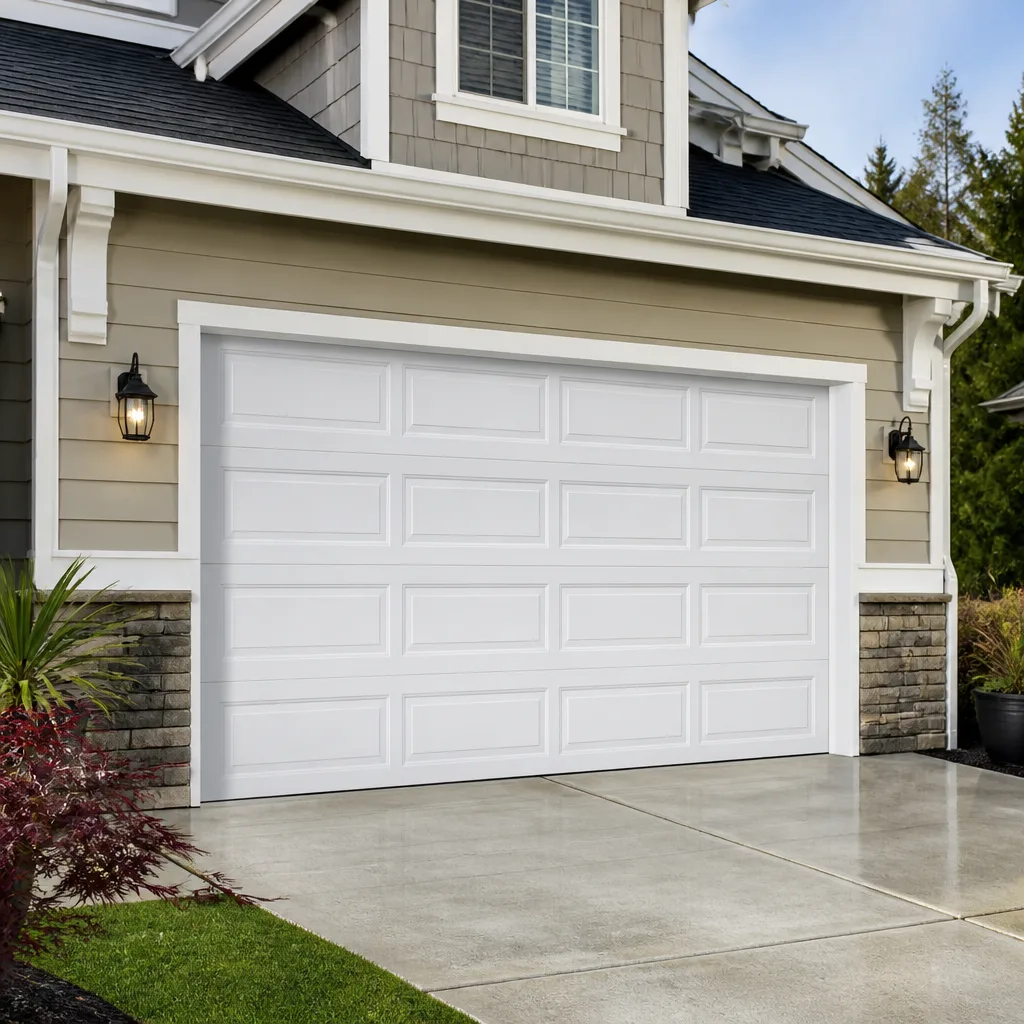 Raised-panel steel
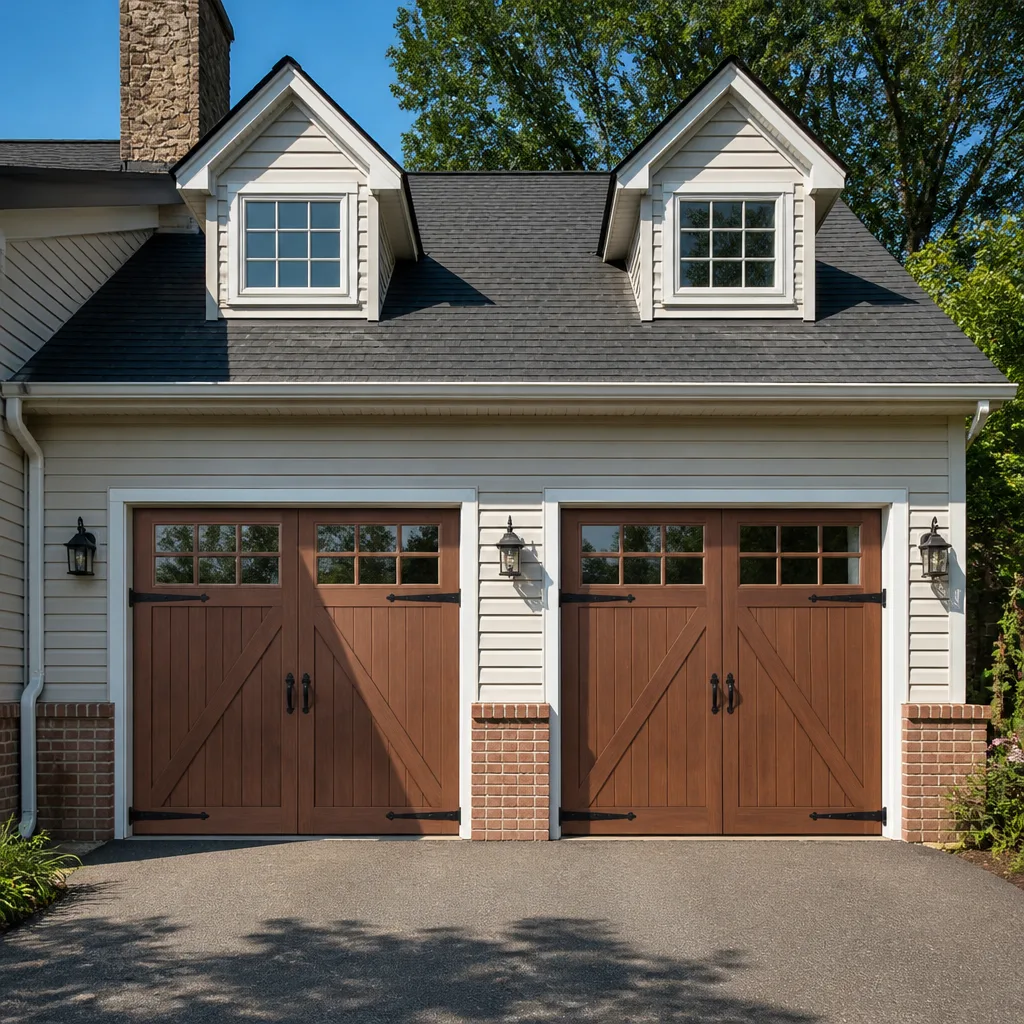 Carriage house
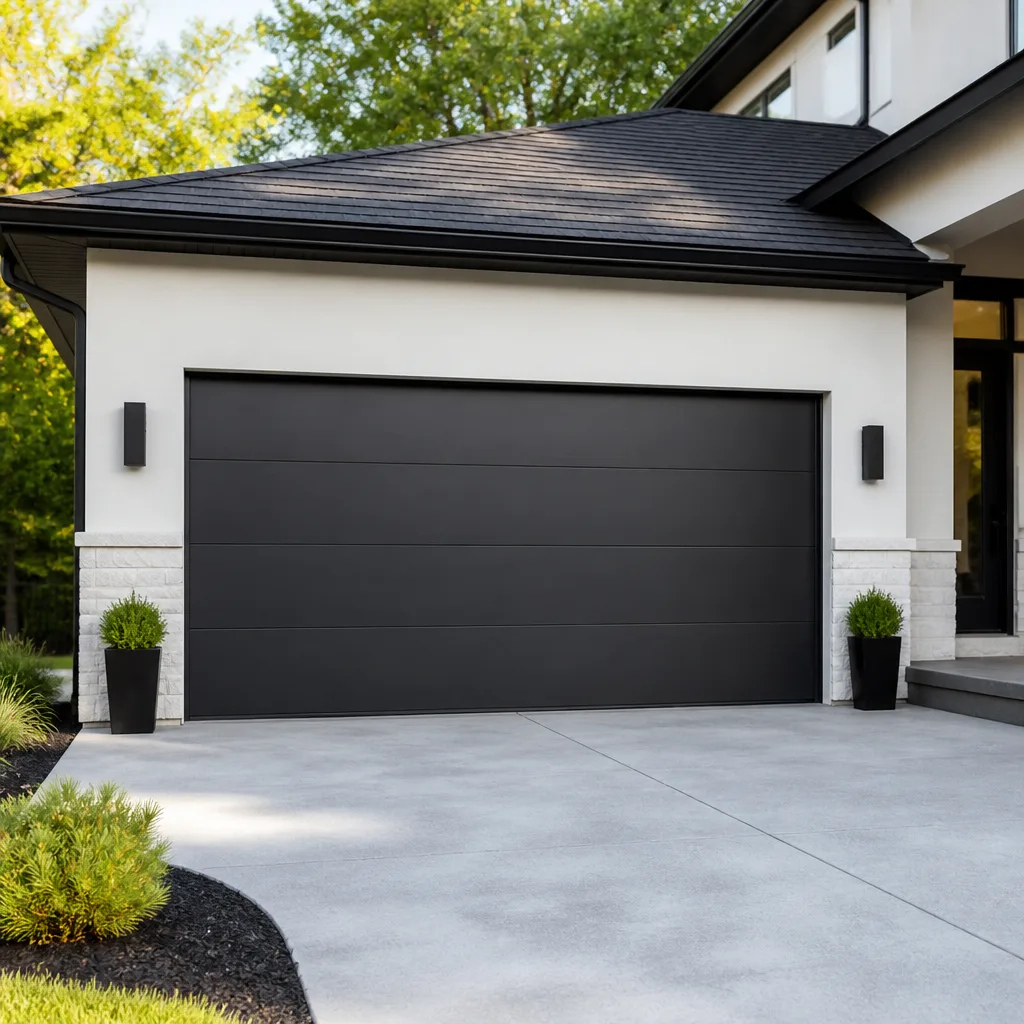 Modern flush
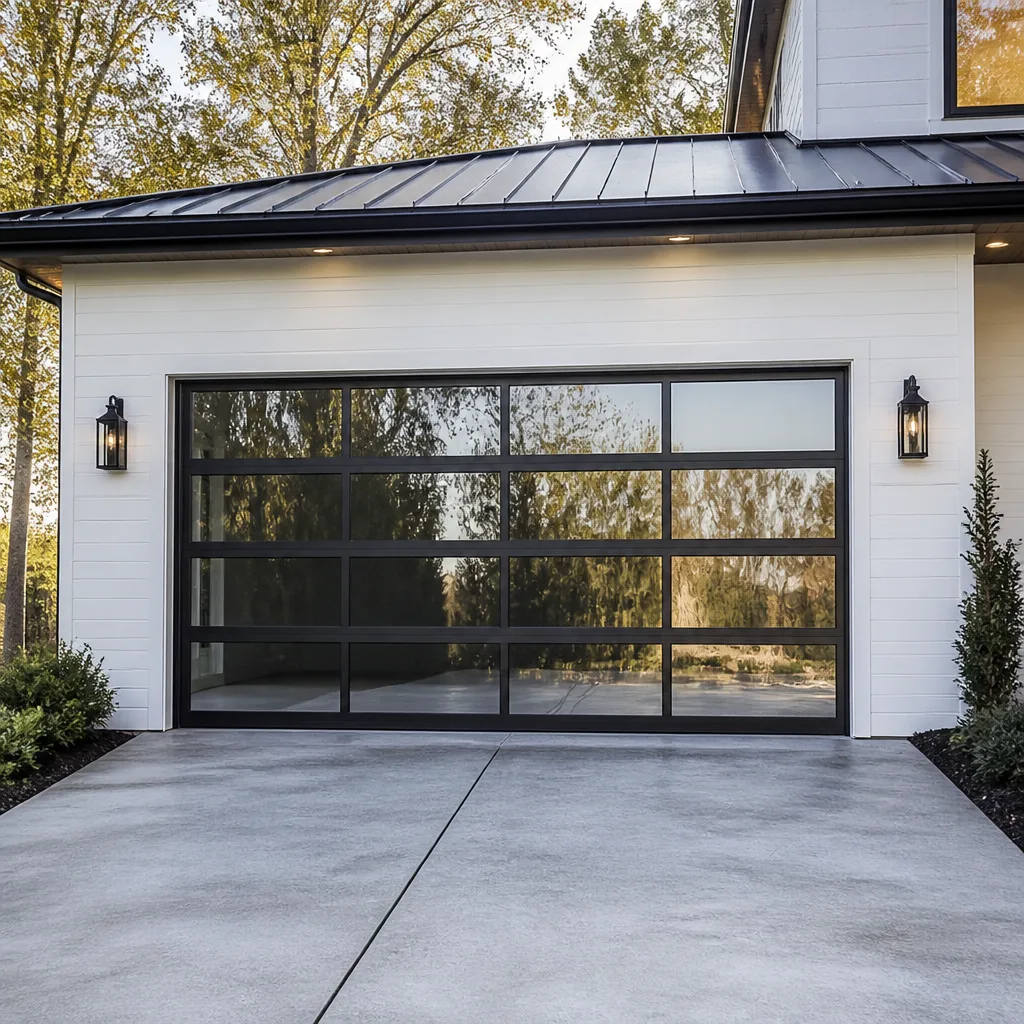 Full-view glass
 LiftMaster openers
 Chamberlain openers
Full 25-point door and opener safety check with every visit - springs, cables, rollers, tracks, and your LiftMaster or Chamberlain opener included
You get a price before we start. It does not change when the pro arrives.
Get your free estimateGarage Door Repair Troubleshooting in Palm Beach Gardens: Common Problems and How to Fix Them
The number-one reason a “repaired” garage door breaks again within 60 days is simple: the wrong component was replaced because the actual failure point was never identified. A door that jumps and shudders gets new rollers when the real problem is a bent track. A door that reverses the moment it touches the floor gets a new opener when a drifting photo-eye is the culprit. In Palm Beach Gardens, where humidity and heat do their own quiet work on springs and sensors, that mismatch between symptom and true cause happens often. This guide maps what you’re hearing and seeing to what’s actually failing, so you stop replacing parts that weren’t broken in the first place.
Quick Answer
Most garage door problems in Palm Beach Gardens fall into six mechanical categories: balance and spring failure, track and roller misalignment, opener logic or sensor faults, cable damage, panel and hinge wear, and weather-seal decay. Match the symptom to the category first, and you eliminate most wasted diagnostic time. Anything involving torsion or extension springs, cables under tension, or the electrical side of the opener is a professional job; everything else has a safe visual check you can do yourself.
Styles & brands we work with
- Raised-panel steel
- Carriage house
- Modern flush
- Full-view glass
- LiftMaster openers
- Chamberlain openers
Table of Contents
- The Six Failure Categories That Cover Nearly Every Problem
- Symptom-to-Cause Mapping: Noise, Movement, and Opener Faults
- Spring Failure: The One Problem You Should Never Diagnose Yourself
- Track or Roller? How to Tell When Your Door Jumps
- What Opener Error Codes Actually Mean
- How South Florida Heat and Humidity Accelerate Specific Failures
- DIY-Safe Checks vs. the Point Where It Becomes a Safety Risk
- When to Call a Professional
The Six Failure Categories That Cover Nearly Every Problem
Garage doors are simple machines with a small number of moving systems, and failures cluster in predictable places. When we troubleshoot in Palm Beach Gardens, we sort the complaint into one of six buckets before we touch anything. That sorting step is where most do-it-yourself repairs go wrong, because two categories can produce identical symptoms.
Here’s the map we work from:
- Balance and spring failure. The door feels heavy, won’t stay open, or slams shut. Torsion springs above the door or extension springs along the sides have lost tension or snapped.
- Track and roller misalignment. The door shudders, jumps, or binds on one side. A track has bent out of plumb, or a roller has worn flat and is grinding instead of rolling.
- Opener logic and sensor faults. The motor runs but the door won’t travel, reverses immediately, or ignores the remote. This is control-side, not mechanical.
- Cable damage. A cable has frayed, slipped off its drum, or snapped. The door may hang crooked or drop on one side.
- Panel and hinge wear. A panel is dented, a hinge is cracked, or a roller bracket has pulled loose from the panel.
- Weather-seal and threshold decay. The bottom seal is torn or flat, letting in water, heat, and pests, and the door rattles against the frame.
Naming the category first tells you which fix applies. A door that jumps, for example, can be a track problem or a roller problem, and they take different repairs. We get into that distinction further down. The point is to diagnose the system, not the noise, because the noise is a symptom and the system is the cause.
If you’d rather hand the sorting off to someone who does it every day, that’s what our garage door repair service is built around. Diagnosing the right component is the whole job.
Symptom-to-Cause Mapping: Noise, Movement, and Opener Faults
The fastest way to troubleshoot a garage door is to stop listening to the whole door and start listening to the part. Noise, movement, and opener behavior are three separate diagnostic channels, and mixing them is how homeowners end up buying a new opener for a door that only needed a roller. In our experience across Palm Beach Gardens homes, this separation alone cuts diagnostic guesswork dramatically.
Noise Symptoms
- Grinding or scraping: usually a worn roller or a dry hinge. Metal-on-metal means a roller has seized and is dragging instead of spinning.
- Squealing: a dry torsion spring or a nylon roller that’s worn through. Lubrication or replacement, depending on where the sound sits.
- Banging or popping: a loose panel, a failing hinge, or a spring that’s about to let go. Popping on a torsion spring is a warning, not a nuisance.
- Rattling: loose bolts and brackets, or a door that’s vibrating because it’s out of balance.
Movement Symptoms
- Door jerks or shudders: track out of alignment or a flattened roller (see the track-versus-roller section).
- Door won’t stay up on its own: balance failure, almost always spring tension.
- Door hangs crooked or drops on one side: a snapped or slipped cable.
- Door reverses as soon as it touches the floor: sensor drift, a misadjusted close limit, or an obstruction the eye is reading.
Opener Symptoms
- Motor hums but nothing moves: the opener’s gear or the door is seized; not always the motor.
- Door only responds from the wall switch: remote or radio interference, or a dead battery in the remote.
- Door travels a few inches then reverses: safety sensor or force-sensitivity issue.
- App won’t connect but the wall button works: WiFi module or network issue on a smart opener.
Read your symptom down the right channel and the cause narrows fast. Grinding isn’t a spring problem, and a crooked door isn’t an opener problem, even if the opener is what finally stopped the door from moving.
Spring Failure: The One Problem You Should Never Diagnose Yourself
Torsion springs and extension springs hold the entire weight of the door. When one fails, it fails with force, and the system that was under tension is suddenly a heavy door held by nothing but the opener and cables. Springs are the most dangerous part of any garage door, and they’re the one part where a visual check is the only check you should make.
What you can safely look at:
- A gap of an inch or more in the coil of a torsion spring above the door
- Extension springs that look stretched out or have lost their coil shape
- The door’s own behavior: heavy to lift by hand, won’t stay open, slams down
What you should never do:
- Wind or unwind a torsion spring with household tools
- Cut, clamp, or adjust a cable under tension
- Try to swap a spring based on a video clip you watched once
We handle spring repair as a dedicated, safety-critical service with brand-matched components, because a mismatched spring changes the door’s balance and can fail again early. In Palm Beach Gardens, heat and humidity work against springs the same way they work against everything metal outdoors: corrosion creeps into the coils, and a spring that would have lasted years inland can weaken faster here. Our garage door spring repair page covers how we match springs to the door’s weight. If your door shows any of the signs above, stop using it and get eyes on it before the opener carries weight it was never meant to carry.
Track or Roller? How to Tell When Your Door Jumps
A jumping door is one of the most misdiagnosed symptoms in garage door repair. The door stutters, shudders, or catches rhythmically on its way up, and it looks identical whether the track is bent or the roller is worn. The difference matters because the fix is completely different: a realigned track costs one repair, while a replaced roller on a bent track fixes nothing. Here’s how we tell them apart in Palm Beach Gardens.
- Watch the jump’s path. A failing roller causes a repeating hitch that tracks with the door’s travel, an even rhythm tied to the wheel rotation. A bent track causes a catch at one specific spot.
- Look down the track by eye. Stand at the bottom and sight along the track. A bend shows as a kink or deviation from straight, usually at the frame or near a joint.
- Spin each roller by hand (with the door closed and the opener disconnected). A good roller spins freely. A worn roller is flat, wobbly, or seized and doesn’t turn.
- Check the bracket the roller sits in. A loose bracket makes the door jump too, and it’s neither a track nor a roller problem, it’s a fastener problem.
If the jump is regular and repeats with the wheel, look at the rollers. If it happens once at the same point in the climb, look at the track. If the door binds so hard that the opener stops, the force setting likely tripped, and that’s a safety response, not the cause.
Track and roller work is one of the safest things to inspect on your own. Straightening a track or replacing rollers is also the kind of hands-on job where getting the track alignment wrong compounds the problem. When a door needs realigning, we bring the door back to square before calling it fixed.
What Opener Error Codes Actually Mean
Error codes and flashing-light patterns on modern openers are the most overlooked troubleshooting shortcut available. LiftMaster and Chamberlain (which share a design lineage, since they’re part of the same family of products) use flash sequences and MyQ app diagnostics that tell you exactly which circuit has a problem. Craftsman and Raynor openers have their own patterns. The trick is translating the code into plain language instead of guessing at the motor.
Common LiftMaster and Chamberlain Patterns
- Rapid flashing, door won’t close: safety sensor obstruction, misalignment, or a broken sensor wire. The door is refusing out of caution, not malfunction.
- Up arrow and down arrow both flashing: the opener hit a travel limit or force fault. Often a light obstruction or a door binding on the track.
- One short blink repeating: radio or remote issue, not a mechanical one. Re-pair the remote before touching the door.
- MyQ app shows “offline” but the wall button works: network or WiFi module problem, not the door.
Smart-Home Layer
LiftMaster’s MyQ and Genie’s Aladdin Connect add a software layer most generic repair guides skip. If the app reports a fault but the door physically operates, troubleshoot the connection first: router, WiFi band, and account pairing. If the physical door also fails, the code points at the hardware. Separating the two saves a pointless service call.
Our garage door opener repair team works on both dominant smart-home-compatible lines every week: LiftMaster/Chamberlain and Genie, plus the older chain drives that still outnumber the new ones. Whether it’s a smart opener or a 20-year-old chain drive, we’ve worked on it.
How South Florida Heat and Humidity Accelerate Specific Failures
National troubleshooting guides are written for a climate the door doesn’t live in here. Palm Beach Gardens heat and humidity create a different failure profile: some components fail faster than the national averages assume, and some that dominate northern guides are rare here. Knowing which is which tells you where to look first.
- Spring corrosion. The indoor-outdoor humidity of a Florida garage is a slow corrosion engine on steel springs. Corroded coils lose tension unevenly, and a door that was fine can start feeling heavy months sooner than a homeowner expects.
- Photo-eye drift. Heat expands the door frame, and the sunlight angle shifts with the season. Either can knock a safety sensor out of alignment. The symptom is the door reversing for no visible reason.
- Seal and threshold decay. Intense UV and humidity break down rubber bottom seals, letting in the heat and afternoon storms. A door that suddenly rattles or lets in water usually needs a seal, not a repair.
- Track and panel warp. Heat cycling plus humidity can warp a section of track or a lightweight panel. The door drifts and binds where it used to glide.
- Opener electronics. Circuit boards in a hot, humid garage age faster. Intermittent faults and app dropouts are more common here than in a cool climate.
None of these are exotic. They’re the ordinary consequences of living here. If you schedule a check at the start of storm season, you’ll catch the weakest link before a wind event scatters the door or an afternoon storm floods the seal. That’s the value of knowing the local failure profile.
DIY-Safe Checks vs. the Point Where It Becomes a Safety Risk
There’s a clear line in garage door repair between what a careful homeowner can check and what belongs to a trained technician. The line isn’t about difficulty. It’s about stored energy. Springs, cables, and torsion systems hold enough force to cause serious injury, and no amount of caution makes those jobs safe for untrained hands.
Safe DIY Checks
- Test the balance: pull the manual release, lift the door halfway, and let go. It should hold. If it drops or feels heavy, the springs need professional attention.
- Look at the safety sensors: are the eye lights solid? Are the lenses clean? Is anything blocking the beam?
- Test the reversal: place a piece of wood or similar object in the door’s path and confirm the door reverses on contact. If it doesn’t, the safety system needs service.
- Clean and inspect the tracks by eye, without disassembling anything.
- Lubricate rollers and hinges per the opener’s documentation.
The Spring Tension Threshold
The moment a repair crosses into spring tension, cables, or the torsion system, it stops being a DIY job. That applies whether the spring is snapped or just weak. Never wind a torsion spring, never clamp a cable under tension, and never put your hand between the door and the track while the opener is engaged. High-tension springs and cables are the exact point where a safe check becomes a serious hazard. If you call us after a spring failure, we’ll tell you how to leave the door safely and what not to touch before we arrive.
For anything electrical inside the opener housing, or any component under live tension, we recommend a trained professional. Some saves aren’t worth the risk. For everything on the “safe check” list, you’ll get more out of your call if you’ve done the checks first.
See the difference
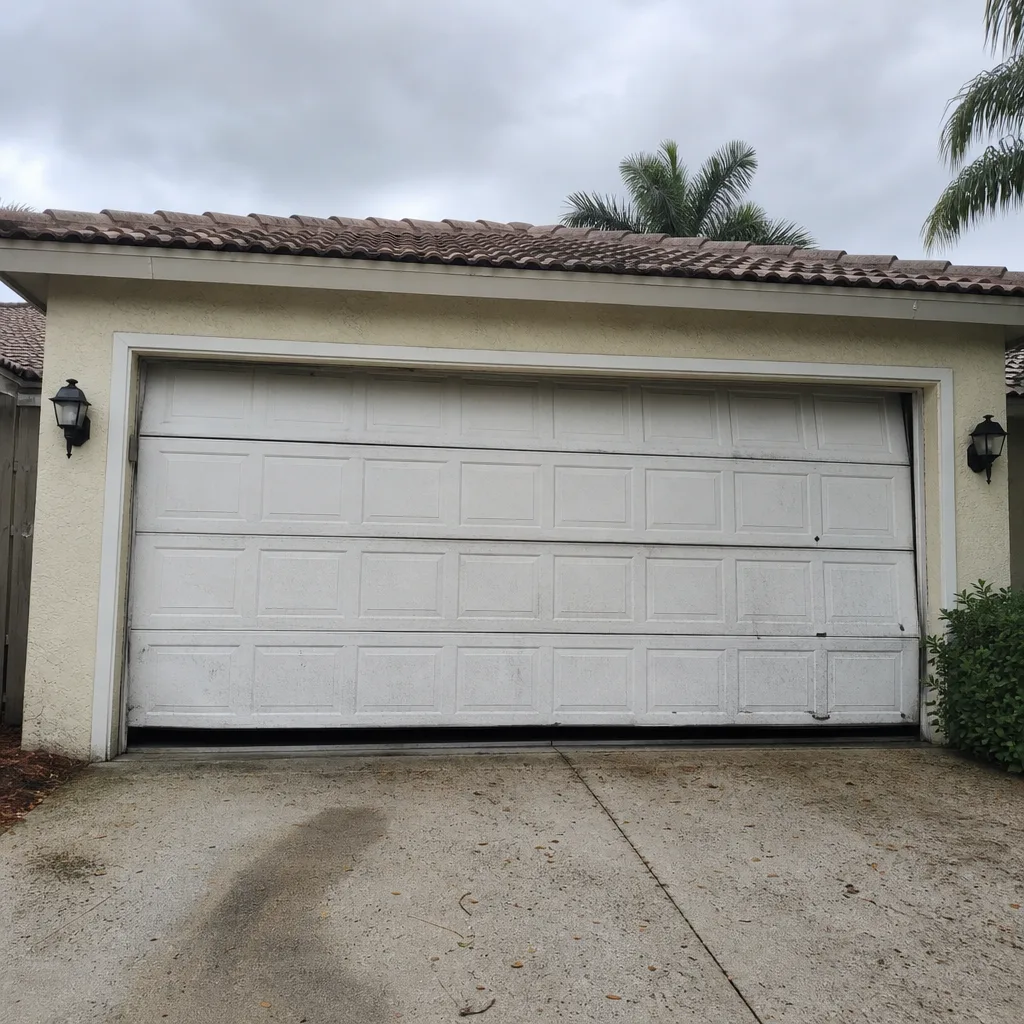 Before
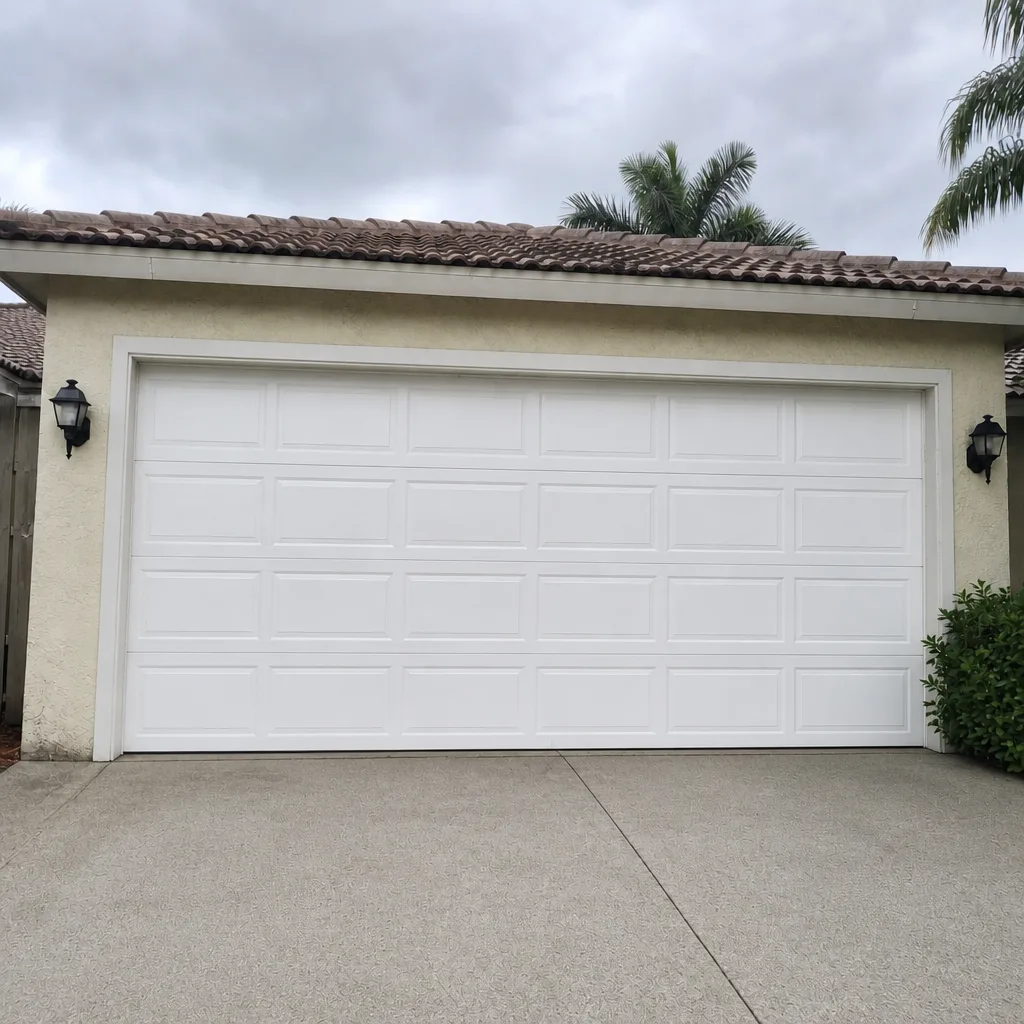 After
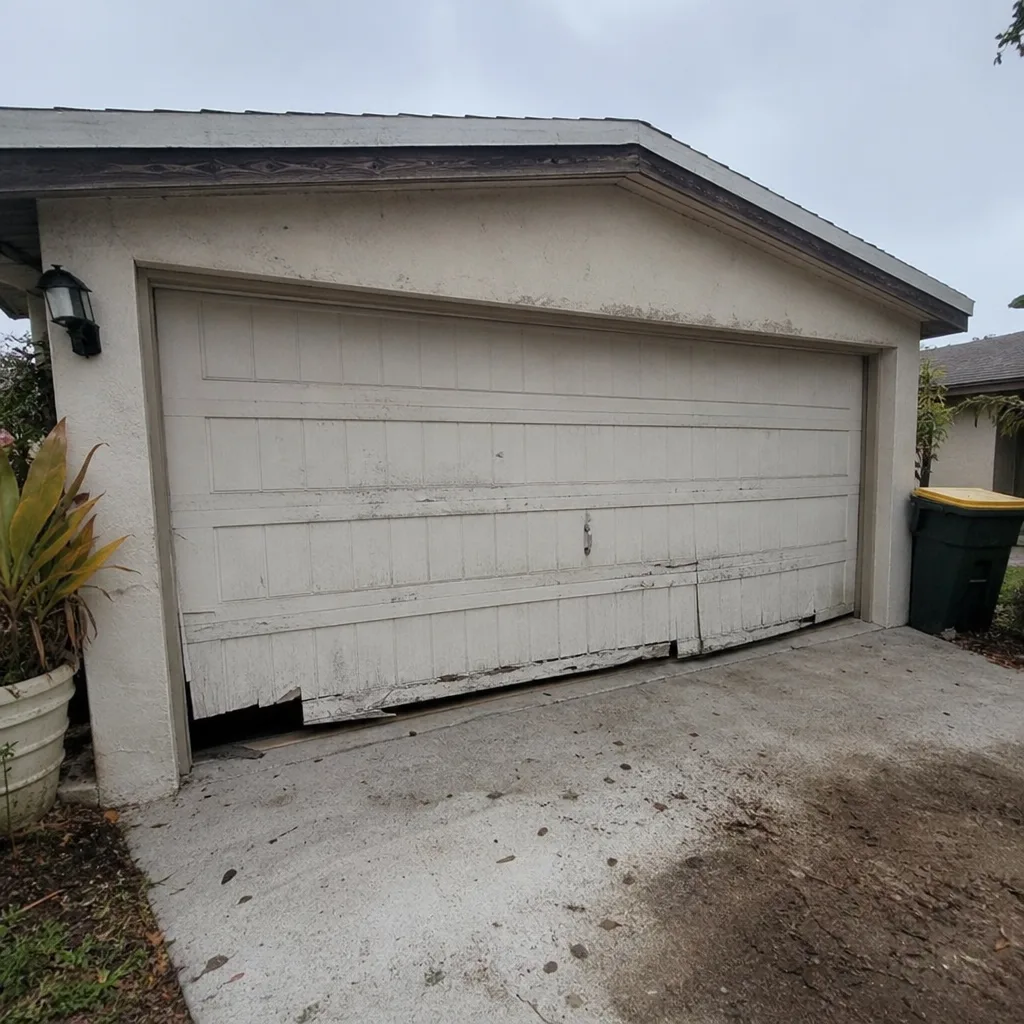 Before
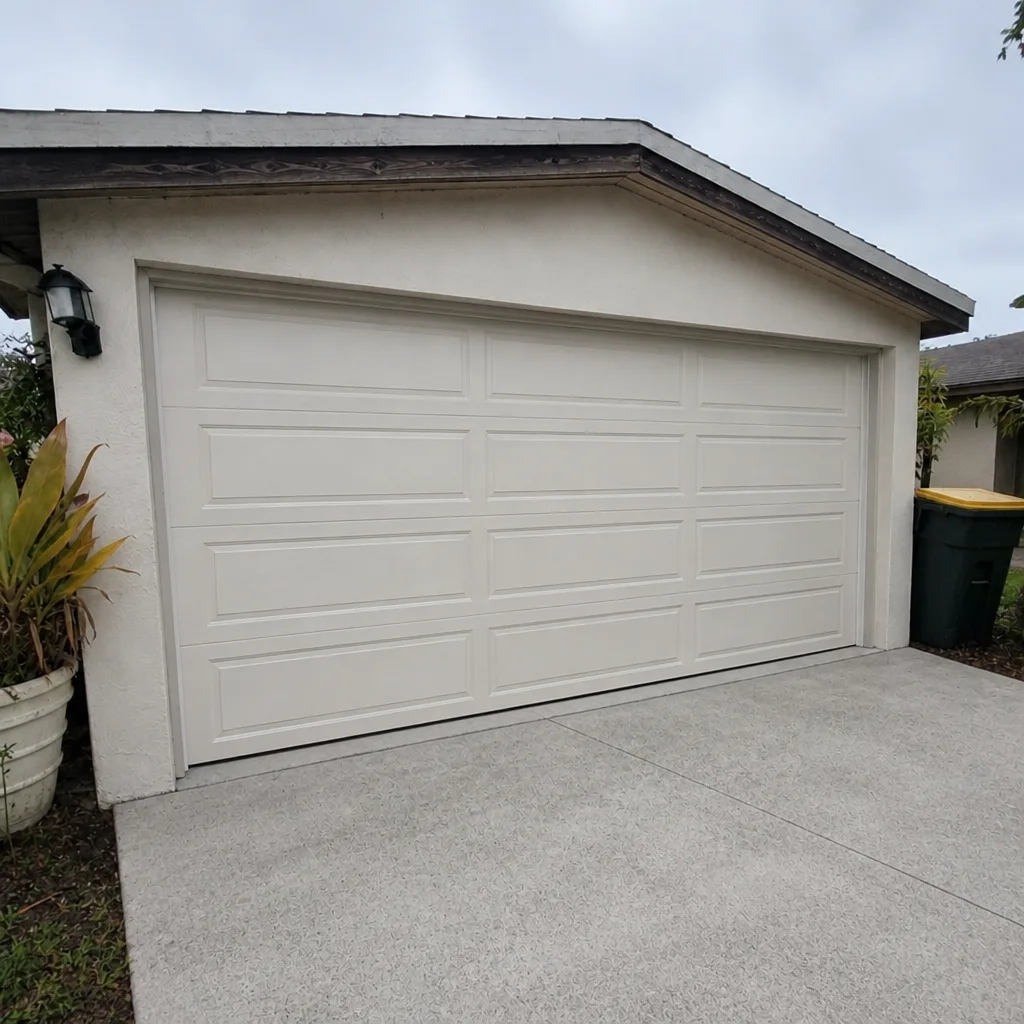 After
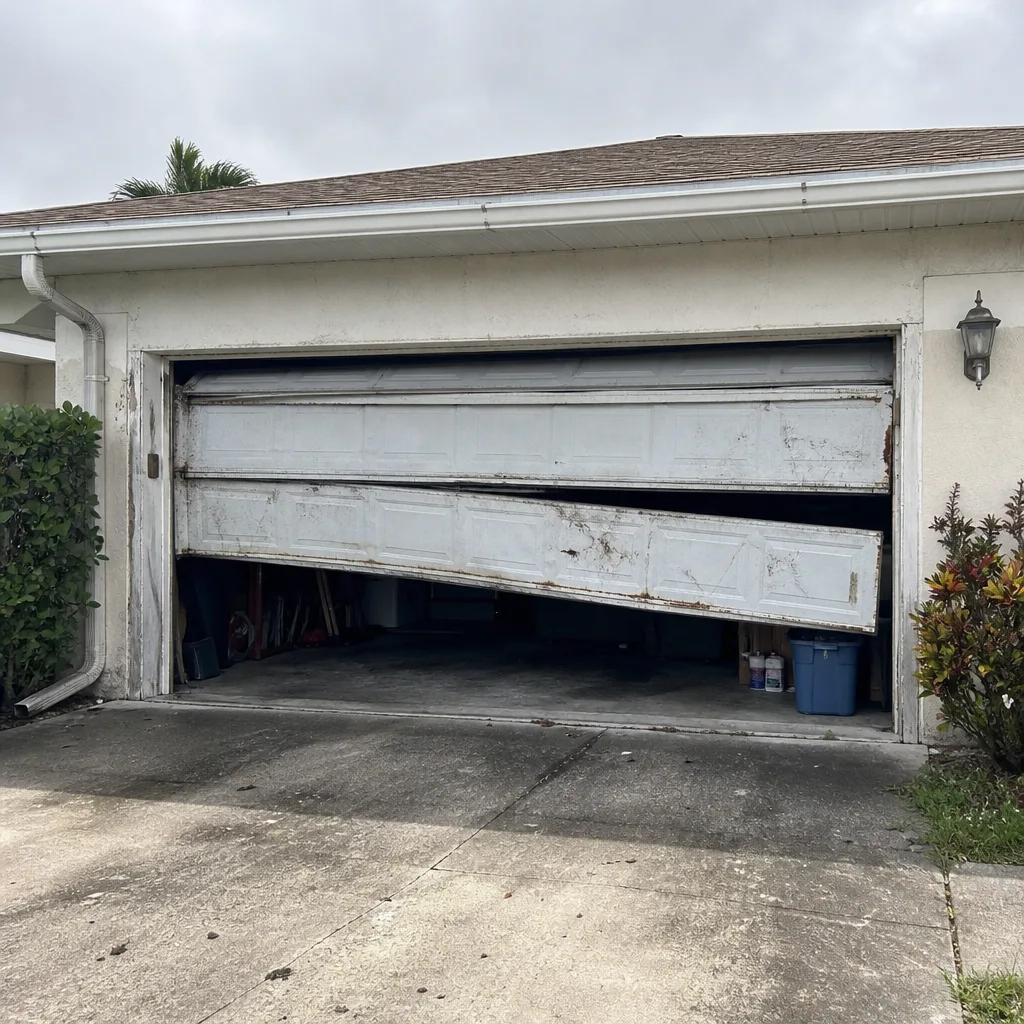 Before
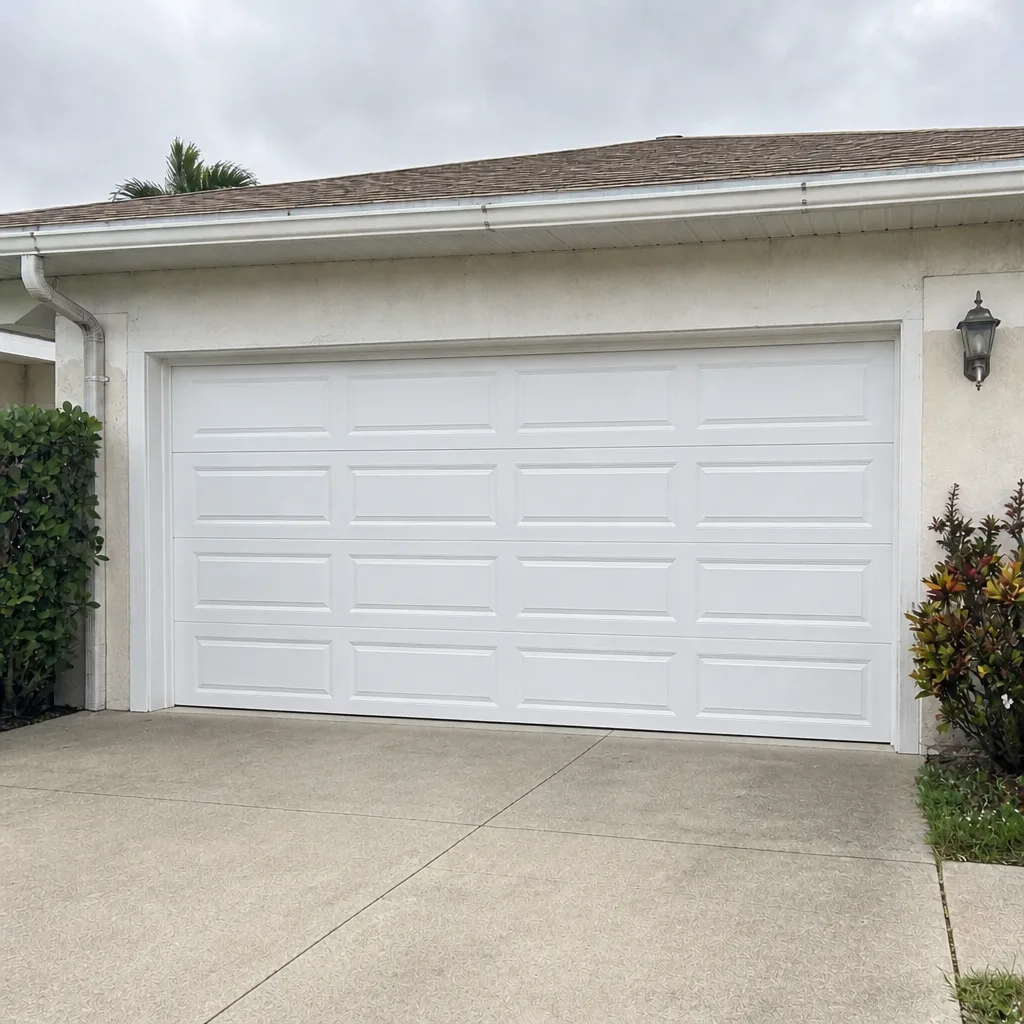 After
Common Mistakes to Avoid
- Replacing the opener when the door is the problem. A heavy door that the opener struggles with points at springs or balance, not the motor. A new opener on an out-of-balance door will fail the same way.
- Buying a spring by eye. Springs are rated by weight and cycle count, not just size. A mismatched spring changes the door’s balance and shortens its life.
- Ignoring the jump and using the door anyway. A jumping door that keeps running grinds through rollers, track, and opener gears, turning a cheap fix into an expensive one.
- Straightening a track with a hammer. A track realigned without measuring ends up out of plumb. The door, not the track, is what suffers.
- Skipping humidity-season checks. Corrosion and photo-eye drift go unnoticed until they fail. A check before storm season catches both.
- Calling a general handyman for spring work. Springs are the most dangerous part of the mechanism and deserve a specialist, not a generalist.
- Forgetting the app. Half the “broken” smart openers we see are a WiFi pairing issue, not a hardware fault.
Each of these mistakes costs you the same thing: a second repair. Avoiding them is what keeps a single fix a single fix.
When to Call a Professional
Call a professional the moment your troubleshooting points to a spring, a cable, or the electrical side of the opener. Also call if the door won’t hold halfway through a manual balance test, if it hangs crooked, if it drops on its own, or if the opener’s force setting keeps tripping after you’ve cleared obstructions. Any of those signs means the door is unsafe to operate and could fail under load. If you’ve cleared a code, realigned a sensor, and the door still won’t close, stop guessing at the motor; the cause is real and worth a proper diagnosis. Palm Beach Gardens Garage Door Repair Pros offers free estimates in Palm Beach Gardens. Call (866) 490-4428 for a same-day visit where the schedule allows, and put the door back in service today.
Frequently Asked Questions
Nearly always. A door that won’t hold halfway through a manual balance test has lost spring tension, either a snapped torsion spring or a stretched extension spring. Balance failure is a spring-and-door problem, not an opener problem. Call (866) 490-4428 to have it checked before the opener carries the weight.
Usually no. Reversing at the floor is most often a drifting photo-eye, a light obstruction at the bottom, or a close-limit setting, all of which are sensor and adjustment issues, not motor failure. On a smart LiftMaster or Chamberlain, the app often confirms this with a sensor code. Call us for an exact diagnosis, and estimates are free.
Listen to the rhythm. A repeating hitch tied to the wheel rotation is a worn roller; a catch at one specific spot in the travel is a bent or misaligned track. Spin the rollers by hand with the door closed and the opener disconnected; a good roller spins freely. If you’re not sure, our technicians will sort it in under a minute.
A rapid flash means the safety sensor is blocked, misaligned, or has a broken wire, and the door is refusing to close as a safety measure. Check the lens alignment and the wire connector first. If the light stays on after cleaning and aligning, call (866) 490-4428 so we can trace the wiring.
Heat and humidity here accelerate corrosion on steel springs, and corroded coils lose tension unevenly, shortening their working life. That’s why a spring that lasts a long time in a dry climate can weaken sooner in Palm Beach Gardens. A pre-storm-season check is the cheapest way to spot it early.
No. Torsion and extension springs hold the full weight of the door under tension, and a wrong move causes serious injury. Never wind, cut, or clamp a spring or a tensioned cable. Spring repair is a professional, safety-critical job, and the estimates are free. Call (866) 490-4428.
The Bottom Line
Most garage door problems fall into six mechanical categories, and the fix depends on which one you’re in, not which one it sounds like. Match symptom to cause first: noise, movement, and opener codes are separate diagnostic channels. Springs, cables, and the electrical side are professional territory; the visual checks are yours. In Palm Beach Gardens, heat and humidity shift the failure profile, so spring corrosion and sensor drift show up earlier than a national guide would predict. Diagnose before you replace, and you’ll skip the second repair. One call covers it: repair, opener, springs, or the new-door decision if repair stops making sense. If you’re still unsure, our Palm Beach Gardens Garage Door Repair Pros team can diagnose the door and walk you through the fix.
Call (866) 490-4428 for a free estimate. We answer 24/7 with fast dispatch from 7am to 7pm, Sunday through Friday. Our technicians have up to 15 years of experience and are ready to put your door back in service today.
Written by the team at Palm Beach Gardens Garage Door Repair Pros.